
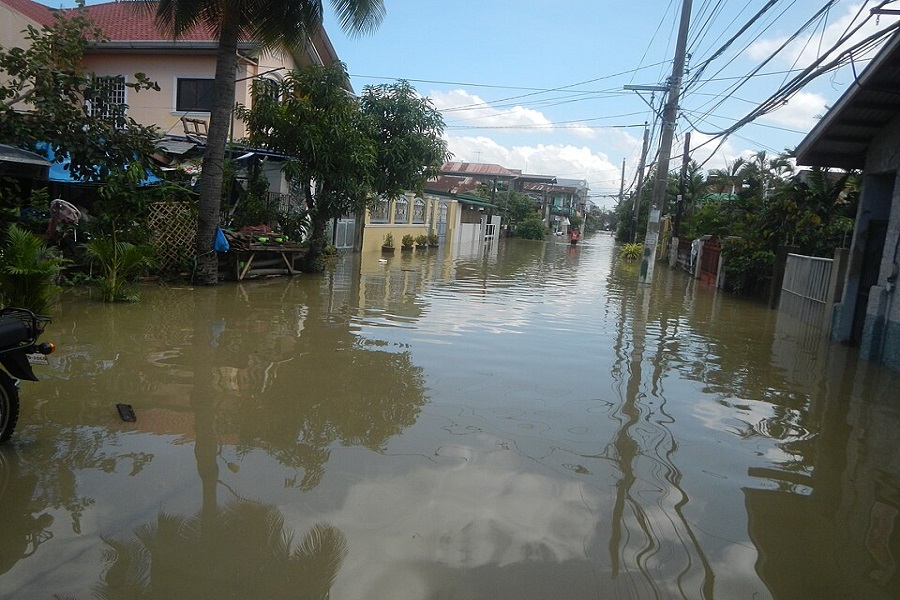
MANILA — Office worker Maria Santos, when Typhoon Paolo churned toward Luzon last October, did what millions of Filipinos have done countless times: she checked her phone for the inevitable announcement. “Walang pasok,” it read — no classes, no work. Government offices closed. Factories in the suburbs sent workers home. Schools across the capital region shut their gates. For Santos, a single mother, it meant another day of lost wages and mounting bills.
“Walang pasok,” in the Philippines, has become a seasonal refrain, as familiar as the monsoon rains. The country sits in the world’s most active typhoon alley, with about 20 tropical cyclones entering its waters each year and several making landfall. Each storm brings not only wind and flood but a temporary paralysis of economic life — a phenomenon that economists and officials increasingly describe as a chronic drag on one of Asia’s fastest-growing economies.
The suspensions are a necessary safety measure in a nation where typhoons can kill hundreds and displace millions. Their frequency, however, exacts a subtler toll: disrupted supply chains, lost productivity, and eroded confidence that compounds with every event. In a country striving to reach upper-middle-income status, the storms keep pulling it two steps forward, one step back.
A Recurring Supply Shock
The numbers tell a story of persistent friction. According to International Monetary Fund analysis, a major Category 5 typhoon can shave about 0.4 percentage points off regional GDP in the first year, while dragging agricultural labor productivity down by 2.5 percent. Across a typical year, with multiple storms of varying intensity, the cumulative economic losses amount to roughly 0.2 to 0.3 percent of national GDP.
Frequent but weaker typhoons tend to reduce local economic activity by around 1 percent, satellite measurements of nighttime lights suggest; rarer, more intense ones can cut it by nearly 3 percent. Over time, climate change has amplified the human cost: one study found that climate-fueled tropical cyclones have already reduced average Filipino household incomes by about 7 percent, with some provinces suffering losses exceeding 20 percent.
Agriculture, which still employs millions even as its share of GDP shrinks, bears the brunt. Flooded rice fields, toppled coconut trees, and ruined fish ponds translate into immediate income losses for rural families and higher food prices in the cities. Manufacturing and services — the engines of recent growth — suffer from power outages, impassable roads, and absent employees. Reconstruction spending provides a later boost, but the initial shock is almost always negative.
In late 2024, an extraordinary cluster of six typhoons in just 30 days hammered northern Luzon, affecting more than 13 million people and causing hundreds of millions of dollars in damage. The back-to-back nature of the storms left little time for recovery, straining government resources and private coping mechanisms.
Lives on Pause
Urban workers like Santos consider “walang pasok” days to often mean no pay. Many private employers do not treat storm suspensions as paid leave, unlike some government offices. In the informal sector — street vendors, jeepney drivers, construction laborers — a closed city means zero earnings.
Farmers in provinces like Cagayan or Bicol face deeper uncertainty. A single storm can destroy an entire season’s crop. Coconut farmers may wait years for trees to recover. Small businesses, already operating on thin margins, sometimes never reopen after major floods.
Education suffers too. The Second Congressional Commission on Education has warned of “significant learning losses,” with some regions losing up to a month of school days in recent years. In a country already grappling with learning gaps exposed by the pandemic, repeated closures deepen the challenge for the next generation of workers.
But Filipinos display remarkable resilience. After Super Typhoon Haiyan devastated the Visayas in 2013, causing damage equivalent to nearly 5 percent of GDP at the time, the national economy rebounded faster than many expected. Remittances from overseas workers, a robust business process outsourcing sector, and domestic consumption helped cushion the blow.
Building Resilience in a Hotter World
Successive Philippine administrations have improved disaster preparedness. Early warning systems from PAGASA, the weather agency, have grown more sophisticated. Cash transfer programs and quick-response funds help families survive the immediate aftermath. The government has also explored catastrophe bonds and insurance to transfer some risk to international markets.
Still, experts say more is needed. Investments in climate-resilient infrastructure — elevated roads, stronger seawalls, flood management systems — remain uneven. Urban planning in flood-prone Metro Manila often lags. And as global temperatures rise, the typhoon season may bring more intense storms, or unusual patterns like the late-season clusters seen recently.
Both the IMF and World Bank have urged stronger fiscal buffers and proactive adaptation measures, warning that without them, the annual cost of disasters could climb toward several percentage points of GDP by 2030.
Back in Quezon City, Maria Santos keeps a small emergency fund and a mental checklist for storm season: canned goods, charged power banks, and flexible hours negotiated with her supervisor. Like many Filipinos, she views the storms not as anomalies but as part of life in an archipelago blessed with natural beauty and cursed by its geography.
“Every time the announcement comes,” she said, “you breathe a little easier knowing you’re safe. But then you start calculating what it will cost.” In the Philippines, “walang pasok” is more than a day off. It is a recurring reminder of the price exacted by nature — and the urgent need to lessen it.
About The Author