IPIL, Zamboanga Sibugay, Philippines — The question resurfaces whenever officials, business leaders or residents discuss the future of the Zamboanga Peninsula. If the regional government is meant to serve everyone, why does it place its administrative center in Pagadian City rather than the region’s largest and busiest city?
A new study suggests that the answer lies not in population size or economic output, but in geography, accessibility and the long-term goal of creating a more balanced region.
Researchers from the Philippine Institute for Development Studies (PIDS) concluded that Pagadian City has evolved into the natural administrative heart of Region IX after nearly 90 percent of regional government agencies relocated there. The study recommends retaining Pagadian as the permanent regional government center while completing the transfer of the remaining offices over the next five to ten years.
The recommendation revives a decades-old policy that designated Pagadian as the regional seat, even as Zamboanga City continued to dominate commerce, industry and higher education.
At first glance, Zamboanga City appears to be the obvious choice. It is the peninsula’s largest urban center, home to its busiest seaport, international airport and largest concentration of businesses. The study argues that people should judge government centers by different standards than commercial capitals.
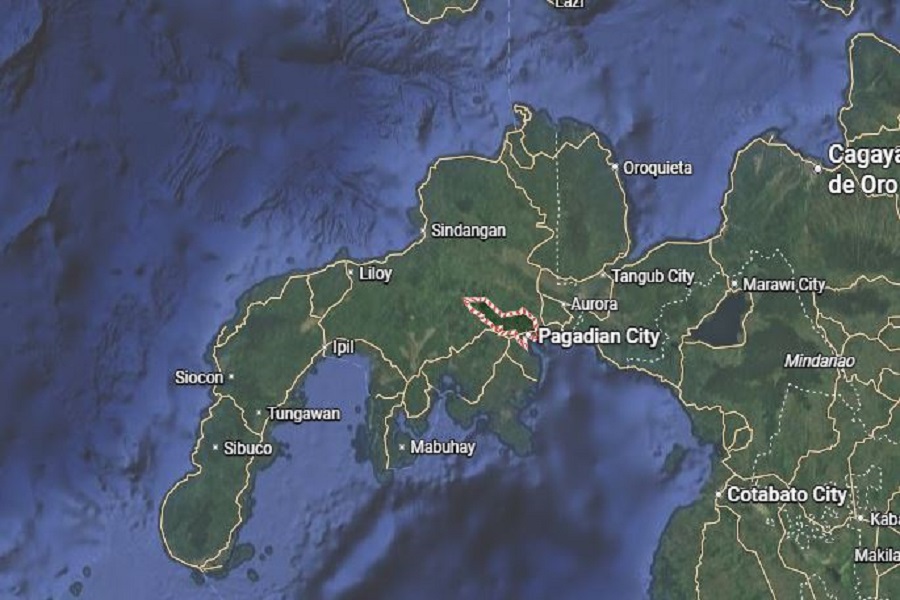
Unlike Zamboanga City, which sits at the western tip of the peninsula, Pagadian occupies a more central position. Residents from Zamboanga Sibugay, Zamboanga del Sur and Zamboanga del Norte generally reach Pagadian faster and with more balanced travel times than if all regional offices were concentrated farther west.
That geographic advantage matters in a region stretching hundreds of kilometers across mountains, coastlines and island communities. For many citizens seeking permits, social services or regulatory approvals, every hour saved on the road translates into lower travel costs and easier access to government.
The researchers also argue that separating the functions of government and commerce can strengthen rather than weaken regional development.
Around the world, several countries deliberately locate political capitals away from their largest economic cities. The arrangement helps prevent excessive concentration of investment while encouraging growth in other areas. The study suggests that the Zamboanga Peninsula is following a similar path, with Zamboanga City continuing to thrive as the region’s commercial gateway while Pagadian develops as its administrative center.
The shift has already reshaped Pagadian. Thousands of government employees now work in the city, creating demand for housing, transportation, restaurants and other services. Businesses have followed the steady stream of employees and visitors who travel to the city for official transactions.
The study sees little reason for concern for Zamboanga City. It remains the peninsula’s principal center for trade, manufacturing, logistics, education and international commerce. Instead of competing with Pagadian, the two cities increasingly perform complementary roles.
Researchers caution that the transition is not yet complete. Some agencies still maintain offices outside Pagadian, creating inefficiencies and requiring citizens to travel between multiple cities to complete government transactions. Completing the relocation, they argue, would improve coordination among agencies and make public services more efficient.
Ultimately, the debate is less about which city is “better” than about which location best serves the entire region. Economic activity naturally gravitates toward Zamboanga City, but regional governance benefits from a more geographically neutral location. In that sense, Pagadian’s greatest advantage is not that it is the biggest city in Region IX—it is that its location brings government closer to more people across the peninsula.
As the Zamboanga Peninsula continues to grow, the researchers argue that preserving this division of roles—Pagadian as the administrative capital and Zamboanga City as the economic engine—offers the strongest foundation for more balanced regional development.
About The Author