
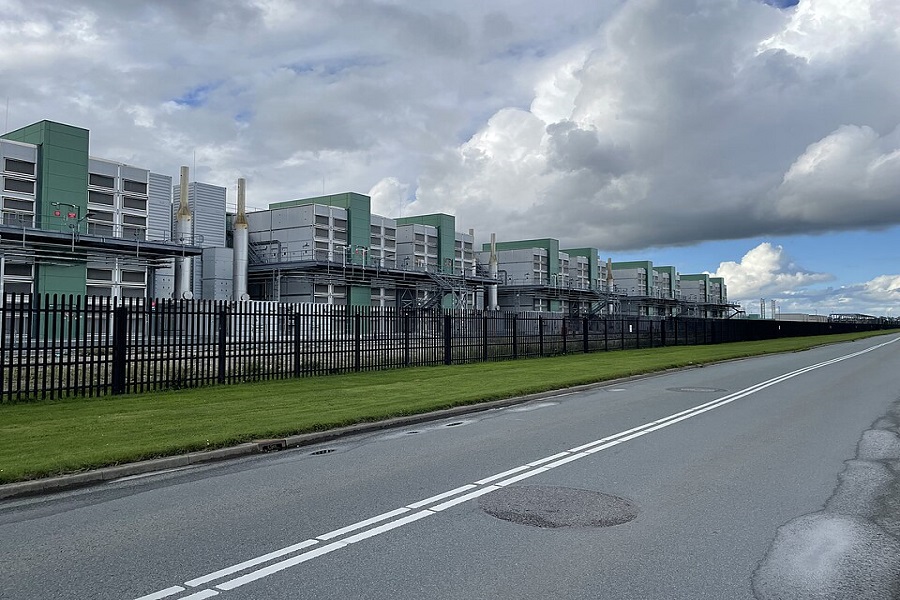
New Clark City was formerly military land hosting US bases, but it is now a master-planned area along the Luzon Economic Corridor. The Philippines hopes this site will help it join the global AI supply chain.
The Philippine government is now looking forward to hosting the Pax Silica “Golden Node.” a proposed 4,000-acre Economic Security Zone. A US-led initiative, Pax Silica Hub aims to secure semiconductors, critical minerals, data centers, and advanced manufacturing outside the main competing supply chains.
The hub will bring in about $10 billion in initial investments, and possibly more in the future. Plans cover data centers, chip factories, logistics, and green energy projects. Officials say the project will create jobs, transfer technology, and help the country move up the value chain.
But like with other big AI projects, the scale raises an important question: In a country already dealing with water shortages, who decides what gets priority when resources are limited?
Resource Demands and Local Challenges
Data centers and semiconductor factories require large amounts of water. Cooling a mid-sized AI facility can use over a million liters each day, and big chip plants need tens of millions of liters of ultra-pure water. The Pax Silica hub will also need a lot of power, possibly several gigawatts, with data centers using most of it. This increases water demand even more, since generating electricity also needs water.
Central Luzon is already facing serious water shortages and relies heavily on groundwater.
Warnings about “water bankruptcy” show that demand is higher than what nature can replace. This increases the risk of land sinking, saltwater mixing into freshwater, and competition for water between farms, homes, and industry, especially during dry seasons when farmers often face restrictions.
Critics argue that profit-oriented AI growth can use up resources quickly, with infrastructure focused on computing instead of local needs. But government planners say they have solutions. They plan to build dedicated substations costing nearly ₱7 billion, solar projects up to 500 MW, and on-site power plants.
Water plans will likely focus on efficiency, recycling, and using non-drinkable sources, following global trends like closed-loop cooling and using reclaimed wastewater. The recent failure of a ₱2.5 billion ICT infrastructure project to attract bidders shows there are challenges, but supporters say these are just early problems for a long-term project.
Geopolitics, Sovereignty, and Local Concerns
With Pax Silica, the Philippines becomes the 13th member of a group that includes the US, Japan, South Korea, and others. The New Clark City site, near Clark International Airport, is the alliance’s first physical “AI-native” hub. Discussions have included long-term leases, possibly up to 99 years, and investor protections. This has sparked debates about land use, national control, and environmental impact.
Farmers’ groups and environmental advocates worry about displacement, food security, industrial waste, and greater geopolitical risks. However, supporters say the hub will use Philippine minerals like nickel and copper and create better jobs for local workers. They also mention tax incentives designed to attract big investors like Foxconn.
The main issue, however, is when aquifers or rivers run low, should priority go to AI data centers powering global models, semiconductor factories, or nearby farms and communities? Local regulators, utilities, and the Bases Conversion and Development Authority (BCDA) will decide how resources are shared through permits, zoning, and contracts, ideally with clear information on water use and efficiency goals.
Looking Past Simple Choices
This is not just a question of being for or against AI or foreign investment. The Pax Silica Hub shows how countries must balance trade-offs: speeding up innovation and economic strength while facing real resource and social costs. Global trends show that efficiency improvements like liquid cooling, wastewater reuse, and better site choices can reduce negative impacts. Some projects elsewhere use reclaimed water to nearly eliminate the need for fresh water.
For the Philippines, success will depend on strong oversight. This includes thorough environmental reviews, rules for water recycling, a cleaner power grid with more renewable energy, and making sure communities benefit more than they are burdened. If the project is managed poorly, it could result in wasted infrastructure and harm to local resources. But with careful planning, it could help build local skills and provide public benefits.
New clusters across the region and the world ask the same question: With growing demand for AI, how can places balance the drive for technology with protecting the environment? The choices made here, from bidding to permits and investment talks, will show whether this hub leads to lasting progress or becomes another example of unchecked growth.
About The Author


