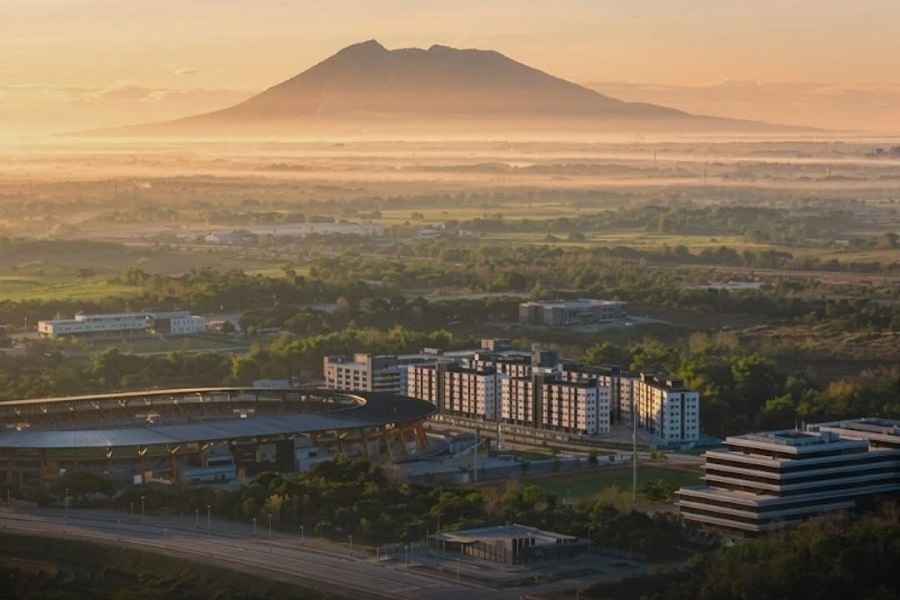
Water, not just electricity, is becoming a major challenge that could affect the long-term success of the Philippines’ plan for the Pax Silica hub as part of a U.S.-led initiative.
The planned Pax Silica hub will be built on a 4,000-acre site in New Clark City, Tarlac province. It will support AI computing, data centers, semiconductor manufacturing, and advanced technology supply chains. However, researchers and local officials warn that these facilities will exacerbate water shortages.
Data centers use large amounts of water, mainly to cool their servers. Public estimates suggest the proposed hub could require between 5 million and 20 million gallons (19 million to 76 million liters) of water per day, depending on its size, cooling methods, and final design. The project developers have not confirmed these numbers.
Industry reports show that a mid-sized data center can use hundreds of thousands of gallons of water each day, and larger AI-focused centers use even more. The planned semiconductor plants at the site need even greater amounts of water, sometimes using tens of millions of liters daily to make ultra-pure water for manufacturing.
Central Luzon has the highest average water shortage among all regions in the Philippines, according to the Philippine Institute for Development Studies. The studies also warn that relying heavily on groundwater increases the risks of land subsidence, saltwater intrusion into freshwater, and falling water tables.
New Clark City now uses about 20 million to 30 million liters of water each day. According to Joshua Bingcang, President and CEO of the Bases Conversion and Development Authority, the city’s water supply could grow to 150 million to 200 million liters a day as the area develops.
In February, a South Korean company and the local water provider, Maynilad, submitted an unsolicited bid of 15 billion pesos ($260 million) to develop and operate a larger water supply and wastewater system for New Clark City. Their plan includes possible underground dams and smart water management technology. The BCDA is now reviewing this joint venture proposal.
BCDA officials say the Pax Silica project is central to the Philippines’ goal of becoming a regional AI hub. The U.S.-supported plan named the site a ‘Golden Node’ to strengthen supply chains for important minerals, semiconductors, and AI infrastructure.
Supporters believe the project could create jobs, attract investment, and accelerate technology transfer. However, researchers and environmental groups demand more transparency about how much water will be needed, what environmental protections will be in place, and how nearby communities might be affected before construction starts.
“Water source becomes a bigger issue in today’s economy,” one analysis said, highlighting the growing tension between expanding high-tech industries and limited water. Around the world, data center operators are using more air-cooling technology, recycling wastewater, and closed-loop cooling systems to use less freshwater. Some new facilities even operate with little or no water for cooling.
Philippine officials have not yet shared detailed estimates of how much water the Pax Silica hub will use, and the project is still in the early planning phase. The BCDA says it is looking for partners to help provide key infrastructure, such as reliable power and water.
Environmental advocates say the project’s long-term success will depend on using advanced water-saving methods and ensuring it does not put additional pressure on local water supplies, especially during very hot periods when cooling needs are highest.
About The Author