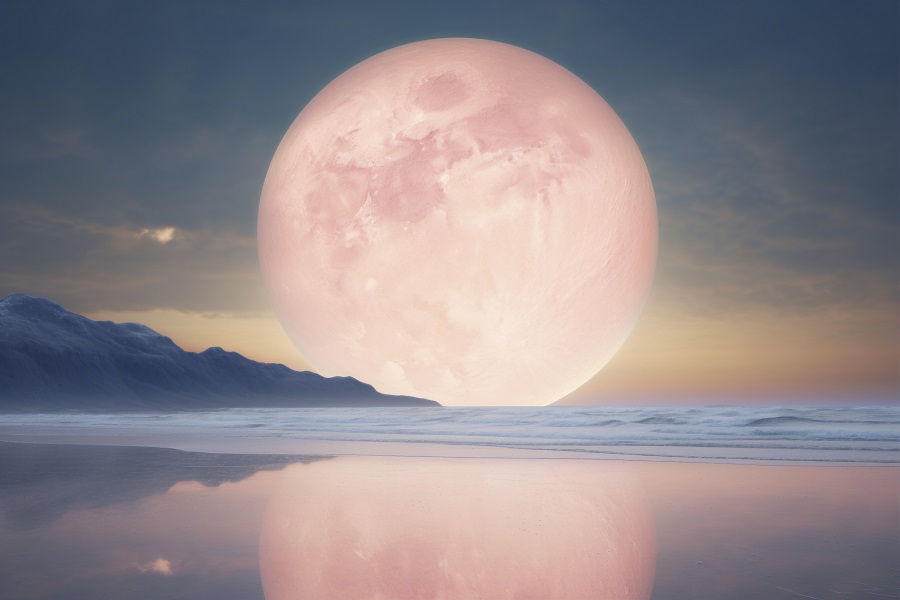
IPIL, Zamboanga Sibugay— Every April, social media fills with posts about the so-called “Pink Moon,” often raising expectations of a rosy-colored spectacle in the night sky.
But skywatchers in the Philippines will likely see nothing unusual—just a regular full moon.
Here’s why.
What is the “Pink Moon”?
The “Pink Moon” refers to the full moon that occurs in April. The name does not describe the moon’s color but comes from seasonal traditions in North America.
According to the Almanac, April’s full moon was named after the early spring bloom of Phlox subulata, a pink wildflower native to eastern North America. Other cultures have their own names for the April full moon, often tied to agriculture or seasonal changes.
Why it doesn’t look pink in the Philippines
Despite its name, the Pink Moon does not actually turn pink—whether viewed in North America or Southeast Asia.
NASA explains that a full moon’s color depends largely on atmospheric conditions, not its name. Factors such as dust, pollution, and humidity can affect how moonlight is scattered, sometimes giving it a yellow, orange, or reddish tint.
In the Philippines, where the climate is tropical and the seasons differ from those in North America, the “pink” reference has no environmental connection. There are no widespread spring blooms of creeping phlox here to mirror the origin of the name.
When can the moon appear reddish or pinkish?
The Pink Moon itself isn’t pink. But the moon can take on warmer hues under certain conditions:
- Low on the horizon: Moonlight travels through more of Earth’s atmosphere, scattering shorter wavelengths and leaving reddish tones.
- Air particles: Dust, smoke, or pollution can deepen the color.
- Lunar eclipses: During these events, the moon can turn red—often called a “blood moon.”
The bottom line
The “Pink Moon” is best understood as a cultural and seasonal label, not an astronomical event that changes the moon’s color.
For observers in the Philippines, it’s still worth looking up—but for its brightness and symbolism, not for a pink glow.
About The Author


