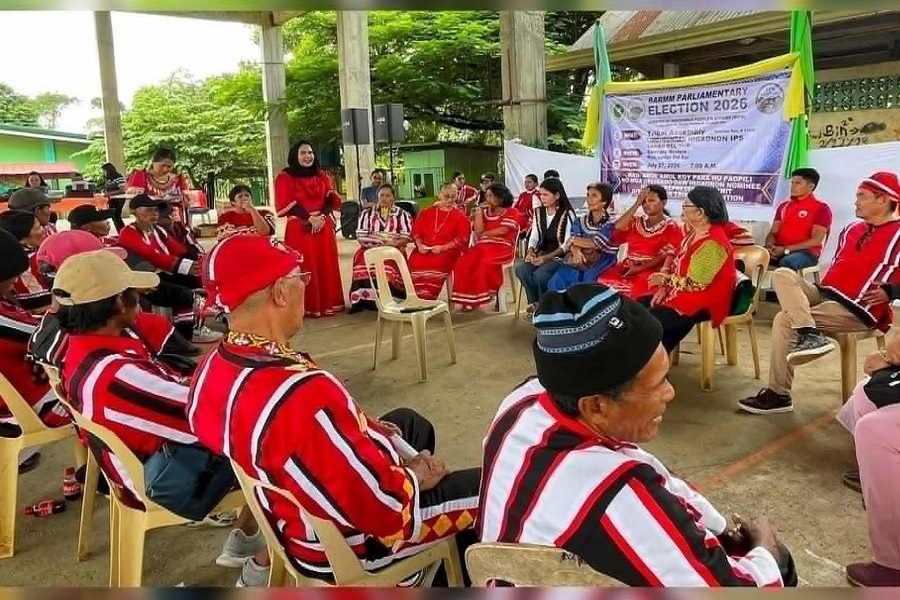
Leaders of the Higaonon tribe met in Wao, Lanao del Sur last week to discuss their nomination for the indigenous peoples representation in the Bangsamoro regional parliament. (John Unson Photo)
COTABATO CITY, Philippines — Officials and lawmakers in the Bangsamoro region are urging non-Moro Indigenous Peoples communities to choose their representatives to the regional parliament carefully, emphasizing that the inter-tribal selection process will determine whether the voices of ancestral-domain communities are effectively heard in government.
Leaders of at least six non-Moro Indigenous tribes in the Bangsamoro Autonomous Region in Muslim Mindanao (BARMM) will converge for an inter-tribal selection process ahead of the Sept. 14 regional parliamentary elections. The groups will select two representatives to occupy seats reserved for Indigenous Peoples in the 80-member Bangsamoro Parliament.
The process is significant because the two Indigenous Peoples representatives will not be elected through the regular ballot administered by the Commission on Elections. Instead, they will be selected through a nomination process involving recognized Indigenous communities. The names of the chosen representatives are expected to be announced on election day, according to regional officials.
The two reserved seats are intended to give the region’s non-Moro Indigenous communities a direct voice in the Bangsamoro government, particularly on policies affecting ancestral domains, cultural preservation, livelihood, natural resources and development.
Three members of the Bangsamoro Parliament — Ishak Mastura of Maguindanao del Norte, Naguib Sinarimbo of Cotabato City and physician and regional Health Minister Kadil Sinolinding Jr. — have separately urged Indigenous leaders to select nominees based on their qualifications, experience and ability to represent their communities.
The lawmakers said the Bangsamoro Parliament is an important venue for Indigenous communities to raise concerns, propose policies and recommend programs that address conditions in their ancestral domains.
The selection process comes as the Bangsamoro government prepares for its first parliamentary elections, with the Commission on Elections, the Police Regional Office-Bangsamoro Autonomous Region and the military’s Western Mindanao Command preparing for the Sept. 14 polls.
The elections will cover the region’s five provinces — Maguindanao del Sur, Maguindanao del Norte, Lanao del Sur, Basilan and Tawi-Tawi — and its three cities: Lamitan, Marawi and Cotabato. Cotabato City, the regional capital, is also home to non-Moro Indigenous communities, including the Teduray.
Lanao del Sur Gov. Mamintal Adiong Jr., a senior official of the Serbisyong Inklusibo, Alyansang Progresibo Party, said in radio reports Saturday that Indigenous Peoples communities should have strong representation in the 80-member parliament.
Such representation, he said, is important in crafting laws and policies that promote peace and sustainable development in ancestral domains. “There would be no Muslim communities in the Bangsamoro region to talk about today if not for the non-Muslim indigenous communities in Mindanao that existed long before Islamic missionaries from what are now independent states in Asia and in the Middle East came in, many centuries ago, to spread Islam in what is now the Bangsamoro region,” Adiong said.
Lanao del Sur has an Indigenous Higaonon community, including residents in the highland town of Wao.
Higaonon leaders held a tribal assembly in Wao on June 27 to discuss potential nominees who could represent Indigenous Peoples communities in the Bangsamoro Parliament.
The Higaonon leaders will join representatives of other Indigenous groups at the inter-tribal conclave before the Sept. 14 elections.
The gathering is more than a procedural step in filling two reserved parliamentary seats. For Indigenous communities, it is an opportunity to determine who can effectively carry their concerns into the region’s highest policymaking body and help shape decisions affecting their ancestral lands and communities.
The challenge for the participating tribes is therefore not simply to nominate someone, but to select representatives with the credibility, knowledge and independence to advocate for Indigenous rights while working within the Bangsamoro parliamentary system.
About The Author