
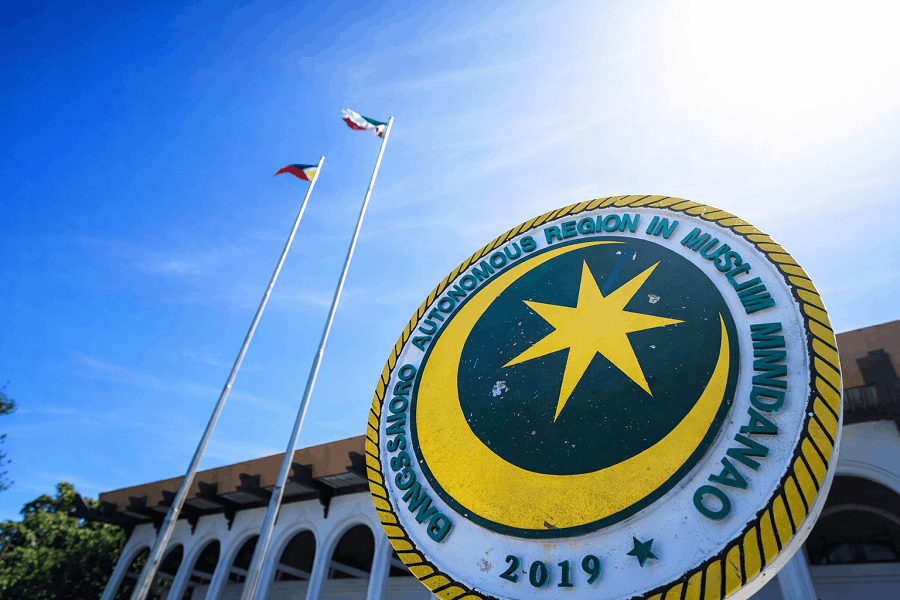
IPIL, ZAMBOANGA SIBUGAY, Philippines — Decades of separatist rebellion, clan feuds and cycles of broken promises once defined the Bangsamoro region. Today, however, the Bangsamoro Autonomous Region in Muslim Mindanao (BARMM) stands on the cusp of its first regular parliamentary elections, scheduled for Sept. 14. The vote arrives amid leadership reshuffles, legal skirmishes and familiar accusations of Manila’s meddling.
But for many in the region, it signals a tentative step away from the region’s violent past toward something resembling accountable, if still imperfect, self-rule.
The path has been anything but smooth. The BARMM was born in 2019 from the Comprehensive Agreement on the Bangsamoro (CAB) and the Bangsamoro Organic Law (BOL), which replaced the weaker Autonomous Region in Muslim Mindanao (ARMM) with greater fiscal autonomy, a parliamentary system and recognition of Moro identity and aspirations. Led initially by the Moro Islamic Liberation Front (MILF) through the Bangsamoro Transition Authority (BTA), the region was meant to decommission fighters, build institutions and hold elections by 2022. Multiple postponements — first due to the pandemic and missing codes, later amid court rulings on districts and Sulu’s exclusion, and further delays into 2026 — extended the transition.
Squabbles have intensified the drama. In March 2025, President Ferdinand Marcos Jr. replaced interim Chief Minister Ahod “Al Haj Murad” Ebrahim, the longtime MILF leader, with Abdulraof Macacua, the head of MILF’s Bangsamoro Islamic Armed Forces (BIAF). MILF officials decried the move as a breach of the spirit of the peace deal, which anticipated MILF leadership during the transition. Tensions over decommissioning — with the MILF pausing full disarmament over lagging socioeconomic support and normalization commitments — and competition with entrenched political clans have added friction. Redistricting disputes reached the Supreme Court, further complicating timelines.
Editor’s Note: The central committee of the Moro Islamic Liberation Front (MILF) has indefinitely suspended Macacua as chief of staff of its armed wing, the Bangsamoro Islamic Armed Forces (BIAF), due to alleged acts of defiance and insubordination.
Measurable Shifts
But beneath the political turbulence, measurable shifts have taken root. The BTA has established ministries, passed key codes (administrative, local government, and others), and managed annual budgets with a block grant system that gives the region more control over funds than its predecessor. Education enrollment has grown significantly, with over a million students in K-12 and alternative programs, alongside technical-vocational graduates entering the workforce. Investments have trickled in, and infrastructure projects have advanced in a region long starved of development.
“This is not the ARMM anymore,” one longtime observer in Cotabato noted, speaking on condition of anonymity to discuss sensitive politics. “There are institutions, there is a parliament — even if interim — and people are starting to see governance, not just survival.”
The parliamentary system itself represents a departure. Designed for coalition-building across MILF affiliates, traditional leaders, indigenous peoples, women, youth and settler communities, it aims to dilute the zero-sum clan politics that fueled rido (blood feuds) and private armies. Anti-dynasty provisions in the BARMM law, though enforcement remains a test, signal intent to curb entrenched families. The United Bangsamoro Justice Party (UBJP), linked to the MILF, will face challengers from coalitions of old-guard politicians.
Challenges
Challenges persist. Poverty rates remain high, clan violence and occasional clashes still displace communities, and normalization — including full decommissioning and dismantling of private armed groups — lags. Critics point to the re-entry of political dynasties into transitional roles and to questions over whether autonomy will prove more than nominal under Manila’s ultimate authority. Sulu’s judicial exit from the region highlighted implementation frictions.
International Crisis Group and local analysts have warned that political clans pose risks to peace if they view the new system as a threat rather than an arena for competition. Still, the very fact of sustained (if messy) debate within a parliamentary framework, rather than on the battlefield, marks progress. Voter education forums and COMELEC preparations, including simulations, reflect efforts to make the Sept. 14 polls credible and inclusive.
Ordinary Bangsamoro residents — farmers in Maguindanao, fisherfolk in Tawi-Tawi, students in Marawi — view the elections as a chance to hold leaders accountable for delivering services, jobs and security. The region’s youth, a large demographic, could prove pivotal in pushing beyond old divisions.
No Fairy Tale
The BARMM’s story is no fairy tale of reconciled enemies building utopia. It is a halting, contested experiment in turning rebellion into routine politics. Squabbles over leadership and timing reveal how fragile trust remains between Manila, the MILF and local power brokers. But repeated extensions, institution-building and incremental gains also show a region inching, despite itself, from cycles of war toward democratic contestation.
The question, as the campaign intensifies ahead of Sept. 14, is whether this first parliament will consolidate peace or reopen old wounds. Even the messy prospect of real elections in a region that has known far too many false dawns feels like movement — a transition from a troubled past, however uncertain the new path ahead may be.
About The Author



One thought on “A Fragile Transition Edges Toward Democracy: Why BARMM’s Historic Sept 14 Parliamentary Elections Signal Hope Amid the Chaos”