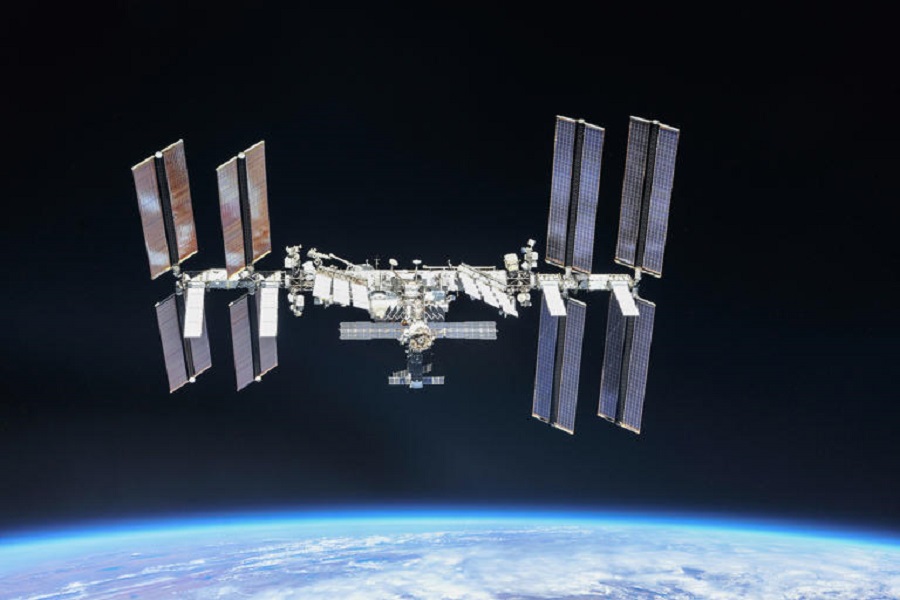
When the International Space Station (ISS) makes its final fiery dive into the Pacific Ocean in 2030, it won’t just be the end of a spacecraft — it’ll be the end of an era. For 30 years, this orbiting laboratory has been humanity’s home in space, continuously crewed since November 2000. It’s where astronauts have floated, scientists have dreamed, and nations have learned (sometimes awkwardly) to work together above the clouds.
But as NASA and its partners prepare to retire the ISS, one big question hangs in the air: what exactly will we be losing?
End of an Era
The ISS has been a shining beacon of human cooperation and discovery. For others, it’s a $150-billion “white elephant” — an expensive symbol of ambition that didn’t quite live up to its scientific promises.
“When it comes to spaceflight, everybody uses the word ‘we,’” says sociologist Paola Castaño-Rodriguez from the University of Exeter. “But as a sociologist, you have to ask — who is ‘we’?”
Castaño-Rodriguez studies the social side of science aboard the ISS — how astronauts, engineers, and researchers from around the world come together to make space science happen. Her upcoming book, Beyond the Lab: The Social Lives of Experiments on the International Space Station, dives into the stories behind some of its most famous research — from the first lettuce grown in space to the twin study involving astronauts Mark and Scott Kelly.
Critics aren’t wrong about the costs. NASA spends about $3 billion a year just to keep the ISS running. In the 1990s, it was pitched as a platform that could help cure cancer or unlock the mysteries of dark matter. Those big promises made for good headlines — but maybe not fair expectations.
“In a way, the problem is how the space station was sold,” says Castaño-Rodriguez. “Scientists had to make huge promises to get funding — and now the station is judged by whether it delivered those promises.”
Experiments on the International Space Station
To date, more than 4,000 experiments have been conducted on the ISS, producing 4,400 scientific papers. While few of them made Earth-shattering discoveries, each one added a small, steady piece to our understanding of how science works off-planet.
That, says Castaño-Rodriguez, is the real success story.
“It’s not just the flashy discoveries,” she explains. “It’s the knowledge of how to do science in such an extreme environment — the processes, the teamwork, the systems. That’s the true legacy of the ISS.”
When the ISS goes, it’ll be replaced by new, commercial space stations — being developed by companies like Axiom Space, Blue Origin, and Starlab. NASA’s plan is to rent space aboard these privately built outposts instead of maintaining its own.
That shift, however, raises new questions. Will science still be public, open, and collaborative — or will it become pay-to-play?
“Right now, ISS data is open,” says Castaño-Rodriguez. “You don’t have to be an astronaut to analyze it. That openness is a big part of the station’s story. The risk is, with private companies running the show, that openness could disappear.”
Cooperation in Space
Still, she’s cautiously optimistic. Many of the people leading these private ventures are ex-NASA engineers and scientists who share the same values of open science and international cooperation.
The ISS has always been about that — cooperation. Even today, amid geopolitical tensions and war, Russian cosmonauts still work side by side with their international crewmates in orbit. That’s something no commercial contract can easily replicate.
“The ISS was a product of its time,” says Castaño-Rodriguez. “It grew out of the Cold War’s end, when we were learning to trust each other again. You can’t easily recreate that.”
When the ISS finally burns up in 2030, we’ll lose more than a piece of hardware. We’ll lose a floating lab that taught us how to live and work together in space.
Perhaps it’s best summed up by Sergei Krikalev, one of the first astronauts to live aboard the ISS back in 2000. When Castaño-Rodriguez asked him what experiments he remembered from that first mission, he smiled and said: “The space station is the experiment.”
About The Author