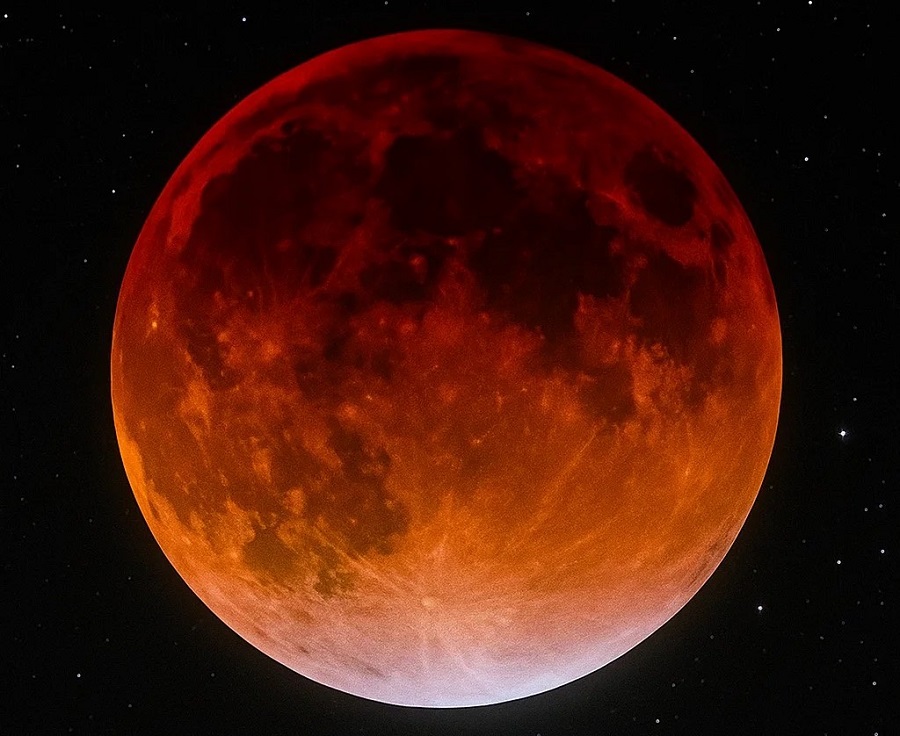

A small asteroid, just 27.5 inches wide (70 cm), blazed across the Siberian sky on December 3, creating a spectacular fireball before harmlessly disintegrating in Earth’s atmosphere.
The European Space Agency (ESA) announced the asteroid’s fiery display in a post on X (formerly Twitter). Describing it as “a nice fireball,” ESA explained that the space rock had been discovered only 12 hours before its atmospheric entry.
Around 11:15 a.m. ET (5:15 p.m. CET), residents of the Yakutia region witnessed the stunning event. Many of the residents captured videos of the bright red streak illuminating the sky before vanishing.
Incoming!☄️
A small asteroid has just been spotted on a collision course with Earth. At around ~70 cm in diameter, the impact will be harmless, likely producing a nice fireball in the sky over northern Siberia around seven hours from now at ~16:15 +/- 05 min UTC (17:15 +/-5 min… pic.twitter.com/ie9yj0FHfB
— European Space Agency (@esa) December 3, 2024
NASA’s Asteroid Watch team also weighed in, noting that the asteroid had first been spotted using the University of Arizona’s Bok telescope.
The Scout system at NASA’s Jet Propulsion Laboratory (JPL) then accurately predicted the impact with incredible precision—down to 10 seconds. Despite its fiery entry, the asteroid posed no threat, safely burning up in the atmosphere.
At 11:14am EST, a very small (<1m) #asteroid will impact Earth’s atmosphere and create a harmless fireball over eastern Russia’s Olyokminsky District. The asteroid was first observed with the University of Arizona’s Bok telescope by the @NASA funded Catalina Sky Survey and…
— NASA Asteroid Watch (@AsteroidWatch) December 3, 2024
While Siberians marveled at the celestial show, NASA’s JPL had its eyes on another visitor: asteroid 2020 XR. This much larger space rock, roughly the size of a football stadium. The asteroid passed close to Earth on December 4, skimming by at a distance of about 1.37 million miles.
No Risk
NASA’s JPL is dedicated to monitoring asteroids and comets that come within 120 million miles of the Sun—Earth’s “orbital neighborhood.” Most of these asteroids pose no risk of impact, but a small fraction, known as hazardous asteroids, are carefully tracked to assess any potential danger. These objects range in size from 10 feet to a staggering 25 miles, but the majority, like the one over Siberia, are harmless cosmic fireworks.
From small meteoroids to massive asteroids, the skies continue to remind us of the dynamic nature of our solar system—and the efforts of scientists working tirelessly to keep us informed and safe.
About The Author