
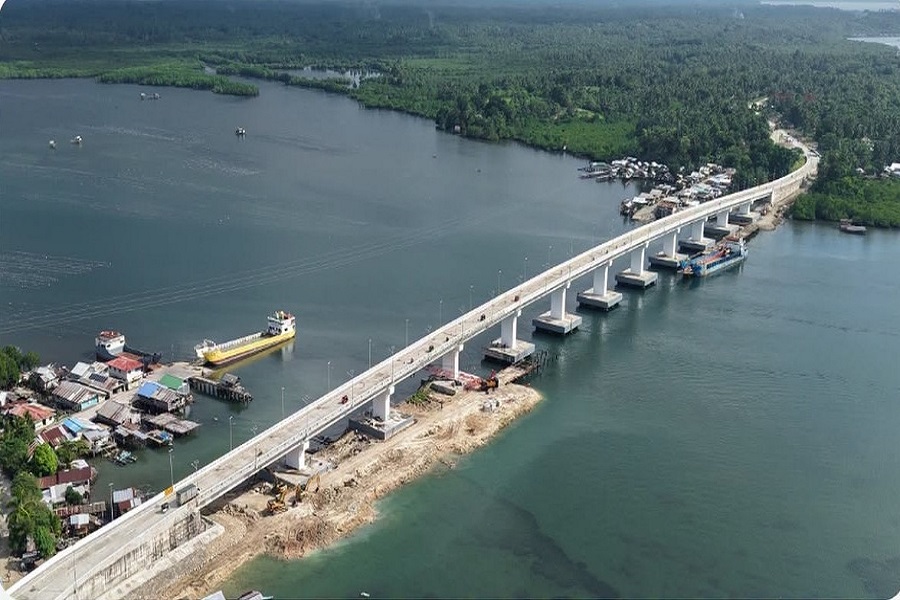
After years of waiting, motorists can finally drive across the Guicam Bridge, cutting what was once an hours-long journey between Olutanga Island and mainland Zamboanga Sibugay to just minutes. But drivers have been given one vital warning: watch the weight and your speed.
The long-awaited Guicam Bridge is now open to the public, giving motorists and travelers a direct road connection between Olutanga Island and the mainland through Alicia, Zamboanga Sibugay.
Island residents have been dependent on barges for years to cross the strait, and the opening marks a dramatic change in the way people, goods and vehicles move between the island communities and the rest of the province.
But with the new route comes an important safety requirement, the Department of Public Works and Highways warned.
The 25-ton rule
Motorists using the bridge must observe a maximum load limit of 25 tons.
That means the combined weight of the vehicle and its load must stay within the prescribed limit. Trucks and other heavy vehicles should take particular care to check their gross weight before crossing.
Overloading can put unnecessary stress on bridge components and may shorten the life of the infrastructure, making compliance essential as the bridge begins regular operations.
Motorists should also follow posted road signs, lane markings and any traffic instructions issued by the Department of Public Works and Highways and local authorities.
What about speed?
A specific bridge-wide speed limit is 20 kph for motorists to observe when crosing the bridge. It is posted on official traffic signs at the site.
Drivers should reduce speed when approaching the bridge, observe traffic conditions and maintain a safe distance from other vehicles.
A bridge that changes the journey
The Guicam Bridge spans the Canalizo Strait and forms part of the road connection between mainland Zamboanga Sibugay and Olutanga Island.
The main bridge section is about 540.8 meters long, while the entire Guicam Bridge project, including its approaches, stretches about 1.21 kilometers. It connects Alicia on the mainland with the Olutanga Island side in Mabuhay.
Residents of Olutanga, Talusan and Mabuhay have relied heavily on sea transport to reach the mainland, a trip that take one to two hours, with most of this travel time is the waiting time.
The new bridge is expected to reduce that journey to just minutes, improving access to markets, schools, hospitals, government offices and jobs. Farmers, fisherfolk and traders are also expected to benefit from the faster movement of produce and other goods.
No more waiting for the barge
The opening effectively ends the long-standing dependence on barges as the primary connection between Olutanga Island and the mainland.
Instead of waiting for a vessel and crossing the strait by sea, motorists can now take the road directly across the new bridge.
The project, funded through the ₱1.155-billion Improving Growth Corridors in Mindanao Road Sector Project, was financed with support from the Asian Development Bank and implemented by the DPWH.
About The Author