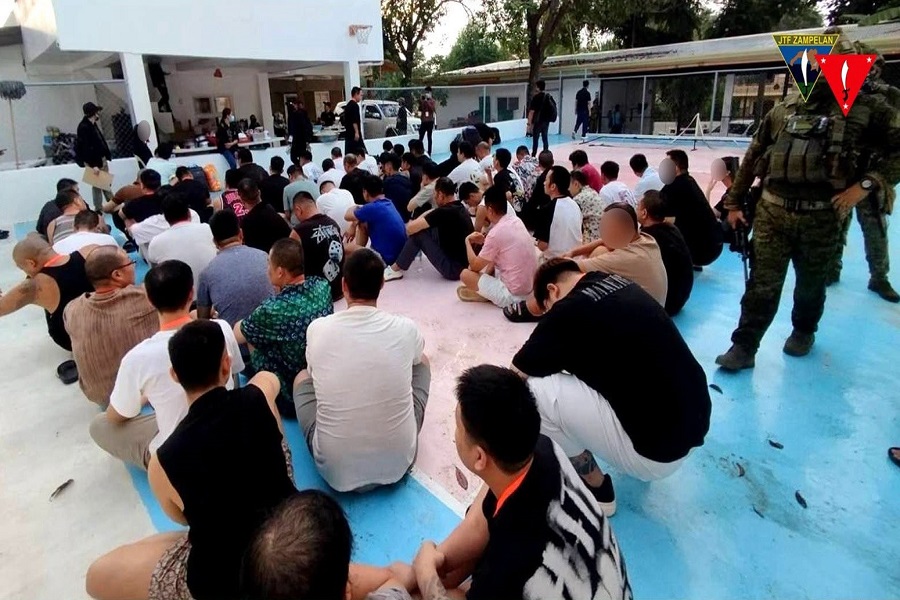
Nearly 200 foreign nationals suspected of involvement in transnational cyber scams and immigration violations were intercepted during joint law enforcement operations in Alicia and Siay, Zamboanga Sibugay, on Friday, as authorities launched a parallel investigation into possible human trafficking and forced labor.
The crackdown uncovered approximately 2,000 mobile phones, computers, laptops and other electronic equipment that investigators are examining for possible links to cyber-fraud operations and organized criminal syndicates.
But authorities are also investigating whether some of the foreign nationals may themselves be victims of trafficking, unlawful recruitment and labor exploitation, raising concerns about possible coercion and restrictions on their movement inside the operation sites.
The National Bureau of Investigation (NBI) and the Bureau of Immigration (BI) are verifying the identities and legal status of the foreign nationals to establish the actual number of those arrested, determine individual liability and identify any connections to suspected criminal networks.

Human trafficking concerns emerge
Investigators are examining indications that some of the foreign workers may have been recruited unlawfully, forced to work or subjected to coercion and restricted movement. The inquiry will seek to establish whether any of those intercepted were compelled to participate in fraudulent activities or were otherwise exploited by individuals operating the facilities.
Authorities have yet to establish how many of the foreign nationals may have been victims of trafficking or how many, if any, will face criminal charges.
The distinction is critical because foreign nationals suspected of immigration or cybercrime violations may also be victims of trafficking who require protection and assistance.
2,000 gadgets seized in joint operation
The operation was spearheaded by the NBI and BI, with security support from the Philippine Army’s Joint Task Group Igsoon under the 102nd Infantry Brigade.
Technical experts are conducting forensic examinations of the seized electronic devices to determine their possible use in cyber-fraud activities and identify evidence that could help investigators trace the people behind the suspected operations.
The analysis may also help establish whether the facilities were connected to wider transnational criminal networks.
Authorities have not yet released a detailed inventory of the equipment or confirmed the specific cyber scams allegedly linked to the sites.

Army commander vows accountability and due process
Maj. Gen. Yegor Rey Barroquillo Jr., commander of Joint Task Force Zampelan and the 1st Infantry (Tabak) Division, said authorities would pursue criminal elements while protecting the rights of all foreign nationals encountered during the operation.
“Our communities must never become safe havens for human trafficking, exploitation, or transnational criminal activities,” Barroquillo said.
He stressed that all foreign nationals would be treated humanely and afforded due process while investigations were underway. “Those who may have been victimized must receive the protection and assistance they need, while those found responsible for violations of our laws must be held accountable through the proper legal process,” he added.
The military’s involvement provided security support for the operation, while the NBI and BI are handling the relevant investigative and immigration procedures.
Laws underpinning the crackdown
The operations were conducted pursuant to Republic Act No. 11862, or the Expanded Anti-Trafficking in Persons Act of 2022, and Commonwealth Act No. 613, or the Philippine Immigration Act of 1940.
The anti-trafficking law provides a legal framework for addressing human trafficking and exploitation, while the Immigration Act governs the entry, stay and related immigration status of foreign nationals in the Philippines.
Investigators will have to establish the facts and determine which provisions of the law, if any, were violated before formal charges can be pursued. The NBI and BI are expected to release an official breakdown of the foreign nationals’ nationalities, validated arrest figures and any formal criminal charges after verification and the completion of the required legal procedures.
In the meantime, investigators are determining whether the facilities were used for transnational cybercrime and establishing whether any of the people found inside were victims of exploitation rather than perpetrators.
All allegations remain subject to investigation, as the foreign nationals’ individual accountability must be established through the appropriate legal process.
About The Author