
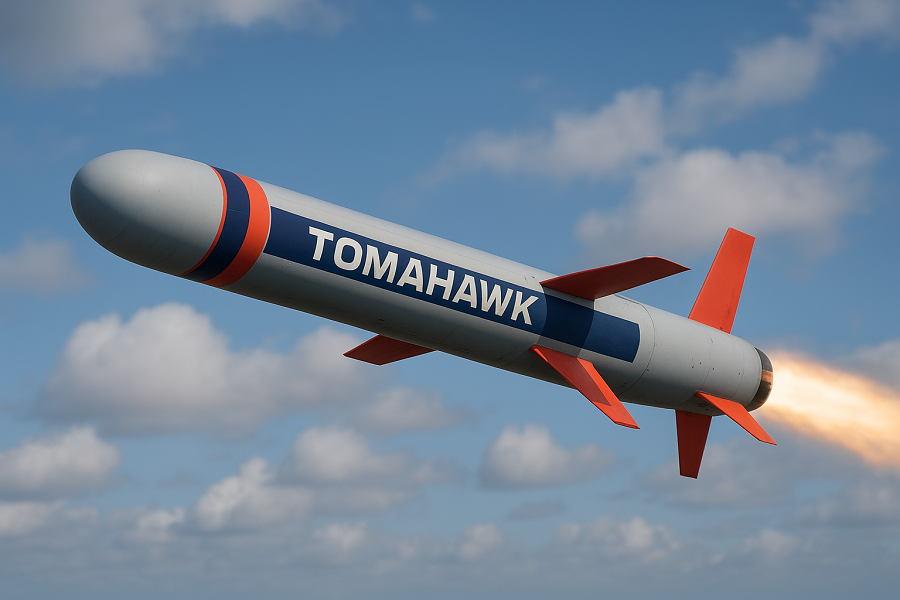
A former British Army officer said U.S.-made Tomahawk cruise missiles could decisively alter the war in Ukraine by breaking through Russia’s air defenses, describing them as “battle-proven weapons” capable of undermining President Vladimir Putin’s military advantage.
Writing in The Telegraph on Friday, Hamish de Bretton-Gordon, a retired British Army colonel and defense analyst, said the Tomahawk has repeatedly demonstrated its effectiveness in past conflicts, including Iraq and Libya, by neutralizing enemy air-defense systems and paving the way for air superiority.
“I’ve seen its devastating effects first hand. It is in a different class to most cruise weapons,” de Bretton-Gordon wrote. “Putin’s so-called impenetrable air defenses are a myth — the Tomahawk has proved this in combat.”
The long-range, precision-guided missile, jointly developed by the United States and the United Kingdom, has a range of about 1,600 kilometers and can be launched from both ships and land-based platforms. De Bretton-Gordon argued that if Ukraine were supplied with Tomahawks, it could “blow a hole in Russia’s S-400 network and win back control of its skies.”
He added that such a move could also strike deep at Russia’s oil infrastructure, damaging its war economy and “potentially threatening Putin’s grip on power.”
The analyst said Moscow and its ally Belarus have reacted sharply to speculation that Ukraine could receive the Tomahawk, claiming their strong opposition was “proof of the missile’s disruptive potential.”
The commentary linked the proposal to U.S. President Donald Trump’s ongoing diplomatic efforts to end the war. De Bretton-Gordon suggested that supplying the weapons could help Trump “forge a path to peace” and even position him for “a Nobel Prize.”
Neither the U.S. Department of Defense nor the White House has confirmed any plans to provide Tomahawk missiles to Ukraine.
Western officials have expressed caution about sending long-range strike weapons capable of reaching deep into Russian territory, citing the risk of escalating the conflict.
The Tomahawk missile, in service since the 1980s, has been a mainstay of Western precision-strike capability, known for its ability to fly at low altitudes and evade radar detection.
De Bretton-Gordon’s remarks add to growing debate within NATO about whether to enhance Ukraine’s long-range capabilities as the war nears its fourth year.
Editor’s note:
Hamish de Bretton-Gordon is a defense analyst and former commanding officer of the UK’s Chemical, Biological, Radiological and Nuclear Regiment. His full commentary appeared in The Telegraph on October 17, 2025.
About The Author


