
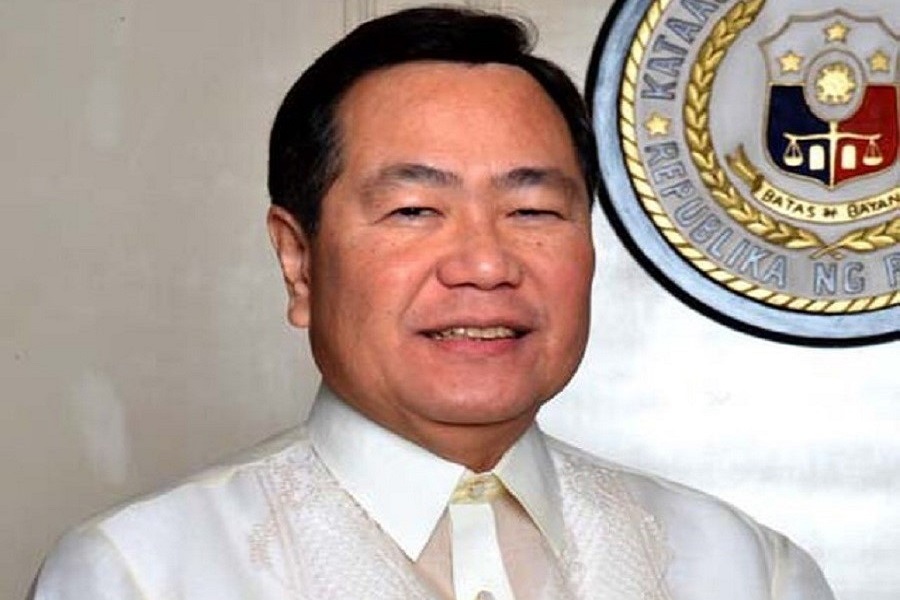
Former Supreme Court associate justice Antonio Carpio urges moral reckoning as ICC hears Rodrigo Duterte’s drug war case over alleged crimes against humanity. (Image by Wikimedia Creative Commons)
MANILA, Philippines – Former Supreme Court associate justice Antonio Carpio is calling for a “moral reckoning” as the International Criminal Court (ICC) presses ahead with hearings against former president Rodrigo Duterte over his bloody war on drugs.
This week, the ICC’s Pre-Trial Chamber I began hearing evidence in the case, where Duterte faces three counts of crimes against humanity tied to thousands of alleged extrajudicial killings when he was Davao City mayor and later president. Prosecutors and lawyers representing victims argued that Duterte knew of — and enabled — what they described as a “widespread and systematic” campaign that largely targeted poor drug users and small-time dealers.
In an interview with ANC, Carpio said the proceedings should push Filipinos to examine their own conscience.
“How come we allowed this? Killing is the worst thing that you can do as a leader. And as people, how can we justify this morally? I think we have to really go through a self-examination of conscience here,” he said.
During the hearings, Duterte’s repeated “kill” rhetoric — delivered in speeches since 2016 — resurfaced, reopening wounds for victims’ families. He had publicly told police to “shoot to kill” suspects who resisted arrest, statements critics said amounted to a green light for lethal force.
Duterte has denied authorizing unlawful killings. In a 2024 congressional hearing, he maintained that the anti-drug campaign aimed to protect “the innocent and the defenseless.”
At The Hague, his former chief presidential legal counsel Salvador Panelo brushed off the violent language as mere “bluster” and “hyperbole” meant to intimidate criminals. Defense lawyer Nicholas Kaufman echoed the argument, framing Duterte’s statements as rhetorical rather than operational orders.
But victims’ counsel Joel Butuyan pushed back before the ICC, saying Duterte’s words fueled a culture of violence.
“The virus of impunity that he spread all over the country has become a cancer that metastasized, infecting millions of Filipinos,” Butuyan told the tribunal.
Despite the international case, Duterte’s supporters continue to defend the crackdown, insisting that many deaths occurred because suspects “nanlaban,” or fought back. Carpio rejected this justification, calling mass killings “worse than any graft and corruption,” and raising questions about Duterte’s motives.
“Did he profit from this? That’s still the big question,” Carpio said.
As the ICC hearings move forward, the case is shaping up not just as a legal battle in The Hague, but as a defining test of how a nation confronts its past.
About The Author