
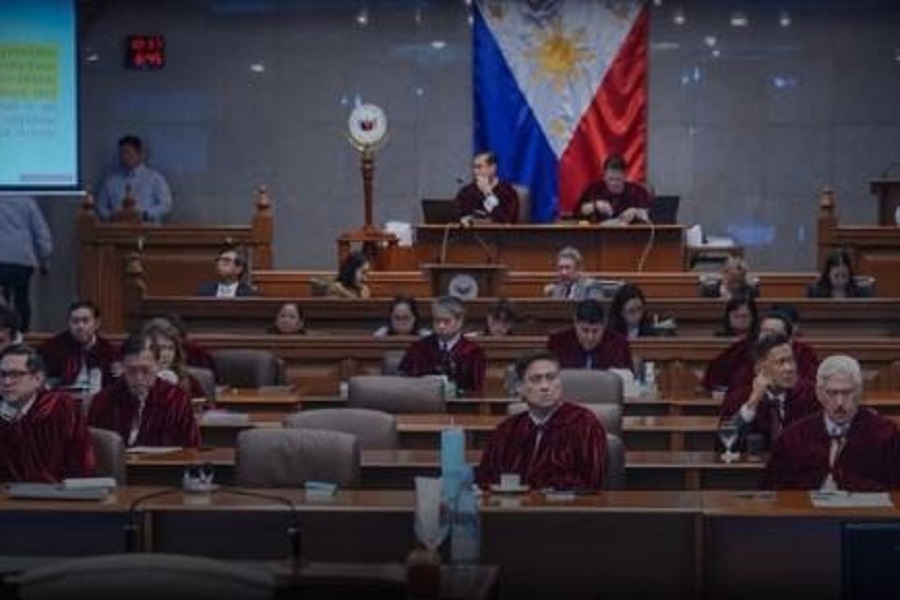
In a dramatic late-afternoon shift that sent shockwaves through Manila’s political establishment, the Philippine Senate, sitting as an impeachment court, voted 13-1 to abandon its fixed voting rules and lower the bar required to convict Vice President Sara Duterte.
The decision scrapped a rigid 16-vote requirement—a fixed two-thirds majority of all 24 seats—that had governed the trial since it opened in July. In its place, senator-judges adopted a flexible formula that counts only those lawmakers who are physically and legally able to participate when the final verdict is handed down.
With several members currently detained, absent, or medically unfit, the shift means the threshold for a guilty verdict could drop to as low as 14 votes. For Duterte, whose trial stems from allegations of public fund misuse, unexplained wealth, and alleged threats against President Ferdinand Marcos Jr. and his family, the adjusted rules render a conviction far more attainable for House prosecutors. Beyond removing her from office, a guilty verdict would permanently bar her from seeking public office, effectively knocking her out of the 2028 presidential race where she has long been considered a frontrunner.
The court’s decision was heavily influenced by expert testimony delivered a week earlier. Seeking clarity on the constitutional language mandating a two-thirds vote of “all the Members of the Senate,” the impeachment court summoned four prominent legal figures as amici curiae, or “friends of the court.”
Three former Supreme Court chief justices offered a unified vision. Hilario Davide Jr., a framer of the 1987 Constitution, submitted a memorandum asserting that the framers never intended to include incapacitated lawmakers in the vote tally. Artemio Panganiban argued that counting absent members would unfairly penalize those attending every session, while Reynato Puno warned that treating constitutional provisions as inflexible math problems risks producing absurdities and injustices.
Only retired Associate Justice Adolfo Azcuna, who also helped draft the Constitution, urged the court to hold the line. Maintaining that “all means all,” Azcuna argued the 16-vote requirement should stand unless a seat is permanently vacated by death, resignation, or removal, warning that lowering the baseline could invite a Supreme Court challenge.
Ultimately, the senator-judges aligned with the majority of the legal experts. Prompted by a challenge from Sen. Erwin Tulfo against the original stance held by Senate President Francis Escudero, the chamber voted to redefine its active membership.
Under the updated guidelines, the denominator used to calculate two-thirds will automatically exclude any senator who is detained, suspended, evading authorities, medically incapacitated, or beyond the Senate’s reach. To prevent fractional loopholes, any decimal resulting from the math will be rounded up to the next whole number—meaning if 20 senators sit for the final vote, two-thirds (13.33) automatically rounds up to 14.
Escudero, who cast the lone dissenting vote, emphasized that the procedural change applies exclusively to Duterte’s impeachment and sets no precedent for future trials.
Defence lawyers strongly condemned the move, arguing that altering procedural rules mid-trial breaches fundamental constitutional rights. Meanwhile, six Duterte-aligned senators signaled their opposition by absenting themselves from the chamber as the decisive vote was taken.
The procedural pivot underscores the severe breakdown of the once-dominant alliance between the Marcos and Duterte camps. By lowering the conviction threshold with the backing of key constitutional scholars, the Senate has handed prosecutors a clearer path to victory, leaving the Vice President’s political future in a remarkably precarious position.
About The Author


