
 Antonio Manaytay
Filipinos should take a lesson from the breakdown of the Uniteam alliance. It tells us something about the way politics works in this country — where political partnerships can be forged to win elections but fall apart when the time comes to govern.
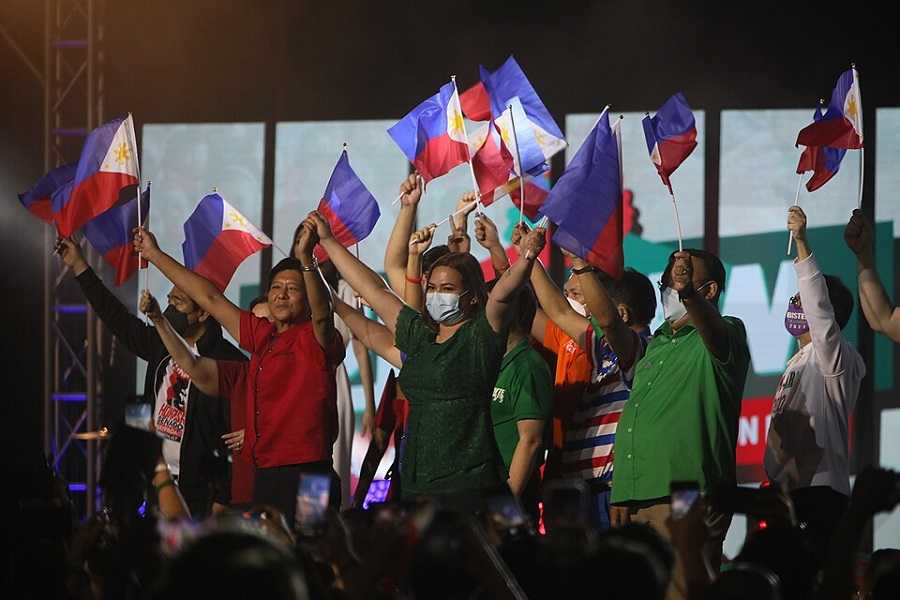
In 2022, Ferdinand Marcos Jr. and Sara Duterte joined forces under the banner of national unity. Their message was simple: unity, stability and continuity. They brought together two influential political families, two formidable voting blocs and two distinct political legacies.
More than 31 million Filipinos voted for Marcos, while Duterte won the vice presidency by a wide margin.
It looked like a winning combination. For a while, it seemed that way.
But there is a difference between building an alliance to win an election and building one to run a country. The former requires political calculations. The latter demands a shared vision, a common agenda and a willingness to work through disagreements.
Uniteam eventually found itself wanting on these fronts.
The more important question, therefore, is not simply why Marcos and Duterte fell out. It is what their falling-out tells us about the deeper problems of Philippine politics.
Unity without a common vision
There is nothing wrong with political alliances. In a democracy, parties and political groups form coalitions to gain public support and put together a government.
But winning an election should be the beginning of a political partnership, not its only purpose.
A lasting coalition needs more than popular candidates and an effective campaign machinery. It needs a shared political direction, clear policy commitments and an understanding of how disagreements will be settled.
Uniteam had the numbers, the resources and the political machinery. What it failed to demonstrate was a common governing vision strong enough to hold its principal partners together when their interests began to diverge.
The differences were not difficult to see.
Marcos pursued closer defense ties with the United States and adopted a firmer position on China’s activities in the West Philippine Sea — a marked departure from the previous administration’s approach to Beijing.
His administration also distanced itself from important aspects of Rodrigo Duterte’s legacy, particularly the conduct of the anti-drug campaign.
These were not merely disagreements between political personalities. They reflected different priorities and approaches to national leadership.
The two camps had found common ground in winning the 2022 elections. But sharing an electoral victory did not necessarily mean sharing the same vision of how the country should be governed.
That distinction would eventually catch up with them.
When political alliances turn into struggles for survival
By 2024, the cracks in the partnership had become impossible to ignore.
Sara Duterte resigned as education secretary in June, leaving the Cabinet. Her office subsequently faced scrutiny over its use of confidential funds, while the House of Representatives reduced its proposed 2025 budget. Duterte maintained that the scrutiny was politically motivated.
What began as a falling-out within the administration had become an increasingly bitter confrontation between two political camps.
In February 2025, the House impeached the vice president over allegations that included her controversial remarks about assassinating the president and questions surrounding public funds. The impeachment proceedings opened another front in the widening political conflict.
The Senate’s handling of the case and the Supreme Court’s intervention over constitutional and procedural questions further demonstrated how the dispute had moved beyond the two principal personalities and into the country’s institutions.
Conflict theory offers a useful way of looking at what happened.
At its core, the confrontation can be viewed as a struggle between powerful political networks seeking to protect their influence, preserve their positions and secure their political futures.
This is no longer simply a disagreement between a president and his vice president. It is also a confrontation between two political camps, each with its own supporters, allies and ambitions.
That distinction matters because political institutions are supposed to serve the public, not become battlegrounds for competing political interests.
In a functioning democracy, disagreements between the president and vice president should be addressed through constitutional processes, institutional accountability and clearly defined responsibilities.
But when political competition revolves around personalities and family networks, government institutions risk becoming caught in the crossfire.
Political scientist Cesi Cruz, writing for the Atlantic Council in February 2026, described Philippine political parties as loose coalitions of political clans, with alliances often held together by personal and family ties rather than enduring institutional commitments.
The Uniteam experience offers a striking illustration of that observation.
While politicians fight, ordinary Filipinos wait
There is another side to this political drama that deserves attention: the people who are left watching from the sidelines.
While political camps fight over influence and political survival, ordinary Filipinos remain preoccupied with the cost of living, jobs, low agricultural incomes, healthcare expenses and access to basic public services.
These are the issues that demand sustained political attention.
Instead, prolonged political confrontations consume public attention, congressional time and institutional resources.
To be clear, Congress has a constitutional duty to investigate allegations of wrongdoing. Impeachment is an accountability mechanism, not inherently a political distraction. But it must be conducted on the basis of evidence, due process and constitutional principles — not reduced to a weapon in a political feud.
The same standard should apply to the executive.
A president should not be beyond scrutiny simply because he occupies the highest office in the land. Neither should a vice president be shielded from accountability because she commands a substantial political following.
The law must apply equally, regardless of political affiliation.
Otherwise, Filipinos are left with the impression that accountability depends less on the evidence than on which political camp has enough votes to advance or block a case.
That is a troubling situation for any democracy.
The problem goes beyond Marcos and Duterte
It would be a mistake to think that replacing one political alliance with another will automatically fix what is wrong with Philippine politics.
The problem runs much deeper than the falling-out between two powerful families.
Political parties exist, but many remain organized around personalities rather than firmly established political platforms. Elections are held regularly, but money, family names and established political networks continue to shape electoral competition. The Constitution guarantees equal access to opportunities for public service, yet the playing field is far from equal.
This helps explain why political alliances can be powerful enough to win elections but too fragile to sustain a common governing agenda.
When the interests that brought their members together begin to diverge, the alliance can quickly unravel.
The Uniteam experience should prompt a more serious national conversation about political party development, campaign finance reform, political dynasties, institutional accountability and meaningful citizen participation.
A democracy cannot depend indefinitely on political marriages between influential families. It needs political institutions that can survive disagreements, leadership changes and shifting electoral fortunes.
More importantly, it needs political parties that stand for something beyond the personalities they put forward during elections.
Unity must mean more than winning elections
There is an irony in the Uniteam story that Filipinos should not miss.
An alliance that campaigned on national unity eventually became an example of political division.
Voters were told that bringing two powerful political families together would help deliver stability. Their eventual falling-out showed just how fragile that promise could be when an alliance rests more on electoral convenience than on shared principles and institutional commitments.
Political unity should not be measured by how many influential personalities can stand together on a campaign stage. It should be measured by their ability to agree on a national agenda, respect institutional boundaries, accept accountability and work together even when their interests do not perfectly align.
A country cannot build lasting political stability on temporary arrangements among competing centers of power.
This is why Philippine politics needs to move beyond personality-driven alliances and toward program-based democratic governance.
The country needs political parties with clear platforms, institutions that are not beholden to political families, and public officials who understand that government is neither an inheritance nor an electoral prize.
It is a public trust.
The demise of Uniteam is more than the breakdown of a political partnership. It should be a moment for Filipinos to reflect on why our democracy can produce powerful electoral coalitions but continues to struggle to turn them into durable institutions of good governance.
Perhaps it is time to ask a more important question.
Instead of endlessly debating which political family should take over from another, shouldn’t Filipinos be asking what kind of political system they want to live under?
One where political power is treated as a family asset, or one where public office is genuinely an opportunity to serve?
The answer will determine whether the next political alliance becomes another temporary marriage of convenience — or whether Philippine politics can finally move toward something more meaningful.
About The Author


