![[UPDATED: 08/19/2026] Student Carrying Two Guns Kills Classmate and Himself in Zamboanga School Shooting as Hundreds Flee Campus](https://i0.wp.com/dailysunchronicle.com/wp-content/uploads/2026/08/adz-school-shooting.jpg?resize=150%2C150&ssl=1)


![[UPDATED: 08/19/2026] Student Carrying Two Guns Kills Classmate and Himself in Zamboanga School Shooting as Hundreds Flee Campus](https://i0.wp.com/dailysunchronicle.com/wp-content/uploads/2026/08/adz-school-shooting.jpg?fit=300%2C167&ssl=1)

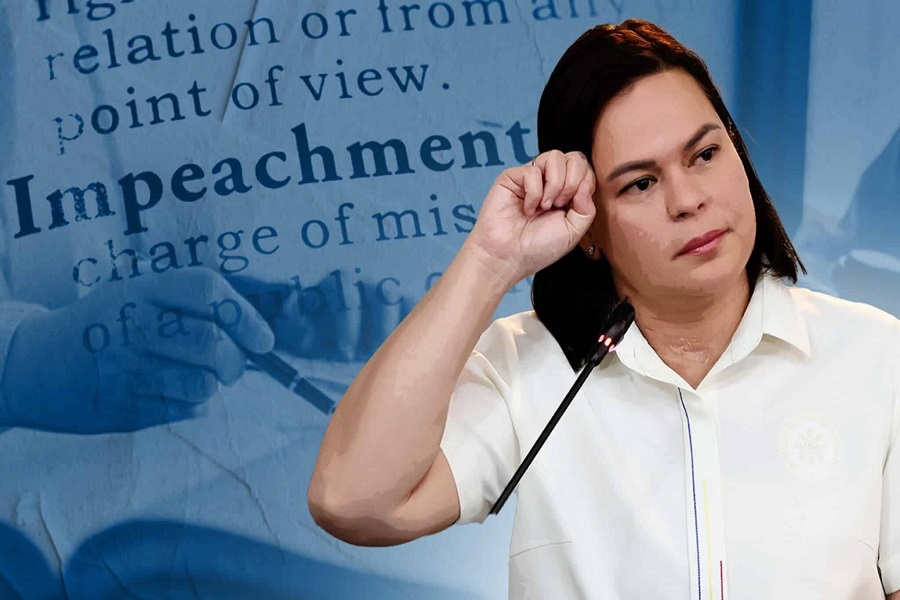
Hundreds of millions of pesos. Cash handed from one official to another. “Informants” with questionable identities. And a staggering ₱125 million allegedly spent and liquidated in just 11 days — including holidays.
The confidential funds controversy involving Vice President Sara Duterte has become one of the most explosive issues surrounding her impeachment case, with allegations that the Office of the Vice President (OVP) and the Department of Education (DepEd) repeatedly violated government rules governing secret funds.
At the heart of the controversy is COA-DBM-DILG-GCG-DND Joint Circular No. 2015-01, which lays down strict rules on how confidential and intelligence funds, or CIF, must be handled, spent and liquidated.
The allegations have also triggered audit disallowances, congressional investigations and criminal complaints.
Here’s what the rules say — and what auditors and investigators say went wrong.
What exactly are confidential funds?
Confidential funds, often called “confi funds,” are government allocations intended for sensitive activities such as intelligence gathering, surveillance and other operations that cannot be publicly disclosed in detail.
But “confidential” does not mean “no questions asked.” The rules impose strict safeguards, including:
- Funds must be handled by a designated Special Disbursing Officer (SDO).
- Cash advances cannot simply be handed over to other people.
- Spending must be connected to legitimate confidential activities of the agency.
- Rewards to informants must be supported by evidence that their information contributed to a successful operation.
- Purchases must have proper documentation, such as official receipts or sales invoices.
- Cash advances cannot be used to reimburse expenses incurred before the money was released.
- The agency head remains accountable for the proper use and liquidation of the funds.
That rulebook became crucial in the controversy surrounding Duterte.
How much money was involved?
The amounts under scrutiny run into the hundreds of millions.
OVP: ₱500 million
The OVP received ₱125 million in confidential funds in late 2022, with auditors and lawmakers focusing heavily on how the money was spent and liquidated.
The OVP subsequently received another ₱375 million during the first three quarters of 2023, through three ₱125-million cash advances.
That brought the OVP total to ₱500 million.
DepEd: ₱112.5 million
While Duterte was education secretary, DepEd also received ₱112.5 million in confidential funds.
Combined, the amount under scrutiny reached approximately ₱612.5 million.
Congress later removed confidential funds from both offices’ budgets for 2024.
So what allegedly went wrong?
Commission on Audit (COA) auditors, including officials from the agency responsible for auditing intelligence and confidential funds, raised a series of questions about how the money was handled.
1. Cash was allegedly handed to an unauthorized person
One of the most serious allegations involves the OVP’s designated SDO, Gina Acosta. Under the rules, the SDO was supposed to handle the cash advances personally.
Instead, Acosta testified that she handed large amounts of money — including the entire ₱125 million withdrawn in December 2022 — to Col. Raymund Lachica, then head of Duterte’s security group.
Lachica was not the designated accountable officer and, according to the allegations, was not covered by the required fidelity bond. Acosta said she turned over the money on Duterte’s instructions.
That became a major point of contention because the governing circular prohibits the unauthorized transfer of cash advances.
2. Money was allegedly used for expenses incurred before the cash was released
Another problem involved the timing of expenses. Under government accounting rules, a cash advance cannot be used to reimburse expenses incurred before the advance was granted.
Auditors questioned reported activities — including some tree-planting and Christmas-related events — because they allegedly took place before the December 20, 2022 cash advance was encashed.
The issue was straightforward: How could a cash advance cover expenses that had already happened?
3. Millions in “rewards” lacked proof
Large amounts of confidential funds were reported as rewards to informants, including cash, goods and medicines.
But auditors said the paperwork did not adequately establish that the information provided by these supposed informants actually led to successful intelligence or surveillance operations.
Statements such as “no untoward incidents” were questioned as insufficient evidence of a successful confidential operation.
For auditors, the problem was not simply that money had been handed out. It was whether the government could prove why the money was paid and what result it produced.
4. Acknowledgment receipts raised eyebrows
The OVP also came under fire over its purchase documentation. Instead of the official receipts or sales invoices generally required for commercial transactions, auditors found that the office submitted numerous acknowledgment receipts.
The purchases reportedly included supplies, medical and food assistance, tables, chairs, computers, printers, and other items.
Auditors questioned why ordinary commercial purchases could not be supported by ordinary commercial receipts.
Some expenditures were also flagged as either outside the allowable confidential activities or insufficiently connected to the OVP’s mandate.
5. Then came the mysterious names
Perhaps one of the strangest details to emerge was the appearance of unusual names in acknowledgment receipts submitted in connection with the confidential funds.
Among those that attracted attention was “Mary Grace Piattos,” along with other names whose identities or official records were questioned.
The controversy intensified because the OVP’s entire ₱125 million late-2022 allocation was reportedly liquidated in only 11 days, covering December 21 to 31 — including weekends and holidays.
Auditors and lawmakers questioned whether such a huge amount could realistically have been spent on legitimate, properly documented confidential operations in such a short period.
Why was Duterte herself put under the spotlight?
As head of the agency, Duterte approved cash advances, signed liquidation and accomplishment reports, and certified the proper use of the funds.
That made her one of the officials held accountable in the audit findings.
COA’s disallowances therefore did not simply raise questions about the people physically handling the cash. They also placed responsibility on senior officials who approved and certified the transactions.
What did COA find?
COA issued a notice of disallowance involving more than ₱73 million of the OVP’s 2022 confidential funds. The finding was later affirmed on appeal.
A separate notice covered the ₱375 million in OVP confidential funds released during the first three quarters of 2023. Related rulings eventually set the amount ordered to be returned at roughly ₱448 million.
These findings became a major component of impeachment complaints against Duterte, which accused her of systematic misuse, irregular liquidation and so-called “ghost expenses.”
Separate plunder and graft complaints were also filed with the Ombudsman.
The controversy has since spilled into congressional investigations and the Senate impeachment proceedings, where COA auditors testified under oath about the alleged irregularities.
Duterte’s defenders vs. her critics
Duterte’s supporters have argued that confidential funds are, by their very nature, secret and that demanding excessive documentation could expose sensitive sources and operations.
Critics and auditors counter that confidential does not mean exempt from accountability. The rules still require authorized handling of the money, proper documentation, and evidence that expenditures were connected to legitimate confidential activities.
That has also fueled a broader question: Why were the OVP and DepEd receiving hundreds of millions of pesos for confidential activities in the first place?
Neither office is traditionally viewed as a conventional intelligence or security agency.
The bottom line
The controversy is no longer simply about a pile of secret government money.
It is about whether ₱612.5 million in confidential funds was handled according to the rules designed to prevent exactly the kind of abuse now alleged.
At the center of the storm are accusations of unauthorized cash transfers, questionable recipients, missing documentation, questionable reimbursements, and extraordinarily rapid liquidation of huge sums.
Duterte and her allies have disputed the allegations and defended the use of confidential funds. But COA’s audit findings, congressional investigations, and the resulting legal and political proceedings have kept one question hanging over the controversy:
Were these truly confidential government operations — or were the rules governing secret funds simply treated as optional? The legal and political battles over the allegations remain ongoing.
About The Author


![[UPDATED: 08/19/2026] Student Carrying Two Guns Kills Classmate and Himself in Zamboanga School Shooting as Hundreds Flee Campus](https://i0.wp.com/dailysunchronicle.com/wp-content/uploads/2026/08/adz-school-shooting.jpg?fit=640%2C356&ssl=1)