
Key Takeaways:
- 46 lawmakers form a coalition majority. The alliance exceeds the 41 seats needed for a majority in BARMM’s 80-member Parliament.
- Macacua promises inclusive governance. The incoming government aims to serve all Bangsamoro constituents, regardless of political affiliation or electoral choice.
- Unity is a central priority. The coalition vows to bridge election-related divisions and reach out to political groups outside the alliance.
- No single party won a majority. Coalition-building is essential to organizing Parliament and electing the next chief minister.
- The transition marks a historic milestone. BARMM is moving from an interim administration toward its first elected parliamentary government.
- Implementation will determine success. The coalition’s credibility will depend on whether its unity pledge translates into responsive public services, broader participation, development and sustained peace.
DAVAO CITY — A group consisting of 46 elected lawmakers is presenting itself as a wide political alliance in order to overcome the divisions resulting from the election, to enhance the authority of the parliament, and to make sure that all the communities in the autonomous area have a role in its future.
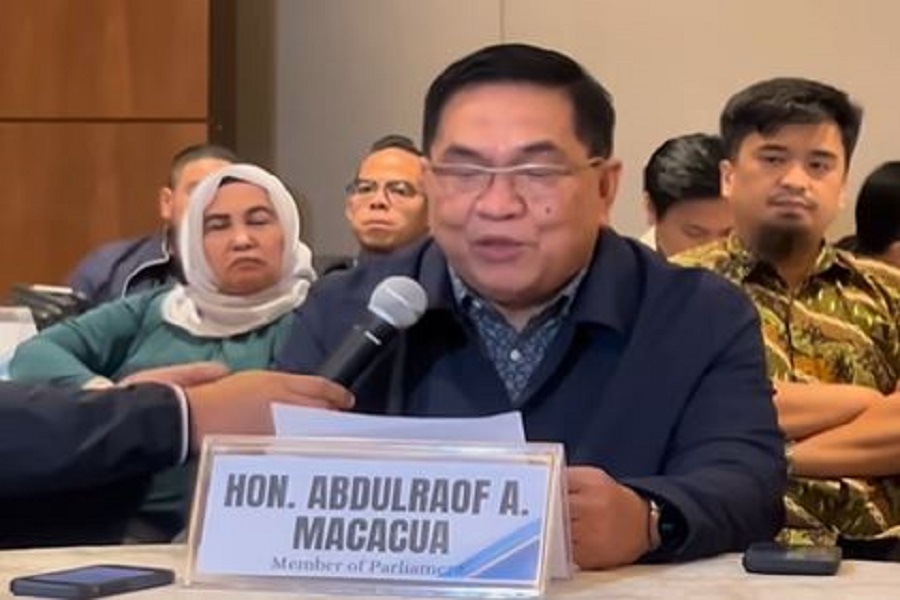
After the lawmakers had signed the coalition agreements, Bangsamoro Interim Chief Minister Abdulraof Macacua committed himself to carrying out an inclusive administration, stating that the new government must serve all the constituents of the Bangsamoro regardless of the political parties to which they belong or the way in which they voted.
“After the formal assumption of the Government of the Day, we will pursue a program for the unity of all Bangsamoro,” Macacua said during a press briefing in this city.
The fact that the coalition has committed itself to inclusivity comes about as a result of the BARMM’s first parliamentary elections, which took place on September 14, marking a milestone in the region’s transition from an interim administration to an elected parliamentary government.
Beyond election victories
The idea that the coalition is inclusive is based on its declared intention to administer the government beyond the political groups which obtained seats in the election.
Macacua characterized the alliance as wide-ranging and reflective of the region’s political diversity. He stated that the new administration would make contact with other groups, overcome the divisions which had been caused during the campaign, and strive to establish a common agenda for the Bangsamoro people.
That method makes it the responsibility of the new government to look after not just its own supporters but also those voters who supported opposing parties and the various communities whose interests may not be directly represented by the coalition’s leadership.
Macacua stated that the government would expand its influence throughout the various provinces and sectors of the region, stressing that political differences should not stop leaders from working together to meet public needs.
The extent to which the coalition is inclusive will finally come down to how well these commitments are turned into representation, policymaking and the delivery of public services when the new government is in office.
A majority built on cooperation
The coalition also deals with a practical problem resulting from the September elections, since no single political party obtained a sufficient number of seats to take control of the 80-member Bangsamoro Parliament.
The number of the 46 members who signed the coalition agreements is greater than the 41 seats required for a parliamentary majority, which gives the alliance the numerical basis for forming the new government.
The Bangsamoro Federalist Party (BFP), which was chaired by Macacua, became the largest party, obtaining 31 seats as a result of its combined party-list and district representation, according to the election reports.
The United Bangsamoro Justice Party (UBJP) and the BARMM Grand Coalition (BGC) also obtained a significant amount of representation in the new legislature.
Since no party has on its own secured a majority, it has become necessary to build coalitions if Parliament is to be organized, its leadership to be selected and the next chief minister to be elected.
The alliance thus provides an opportunity of converting electoral competition into cooperation; but its durability will depend on whether the parties involved are able to keep a common governing agenda while at the same time respecting their separate political interests.
From political unity to public service
Macacua expressed his thanks to the 46 lawmakers for having placed their trust and shown their commitment, as well as to the national government for respecting the institutions and political processes of BARMM.
He stated that the coalition was ready to proceed when Parliament meets, all its members being united in their aim of serving the Bangsamoro people.
The new administration is under expectations that go beyond simply securing a parliamentary majority; it also has to maintain the achievements of the Bangsamoro peace process, reinforce democratic institutions, and promote development throughout the autonomous region.
A government that is inclusive could create the conditions for wider participation and make governance more responsive to communities which have suffered from long-term conflict and political instability.
But a coalition’s size alone does not guarantee inclusivity. Its credibility will depend on whether leaders accommodate different political perspectives, listen to communities outside their alliance, and ensure public programs respond to ordinary residents’ needs.
The 80 newly elected lawmakers are scheduled to assume office on Oct. 30, when Parliament is expected to organize the new government and elect a chief minister.
As BARMM enters this new phase of self-government, the coalition’s central test will be whether its promise of unity can move beyond a political agreement and become a governing principle that benefits the region’s diverse communities.
About The Author