
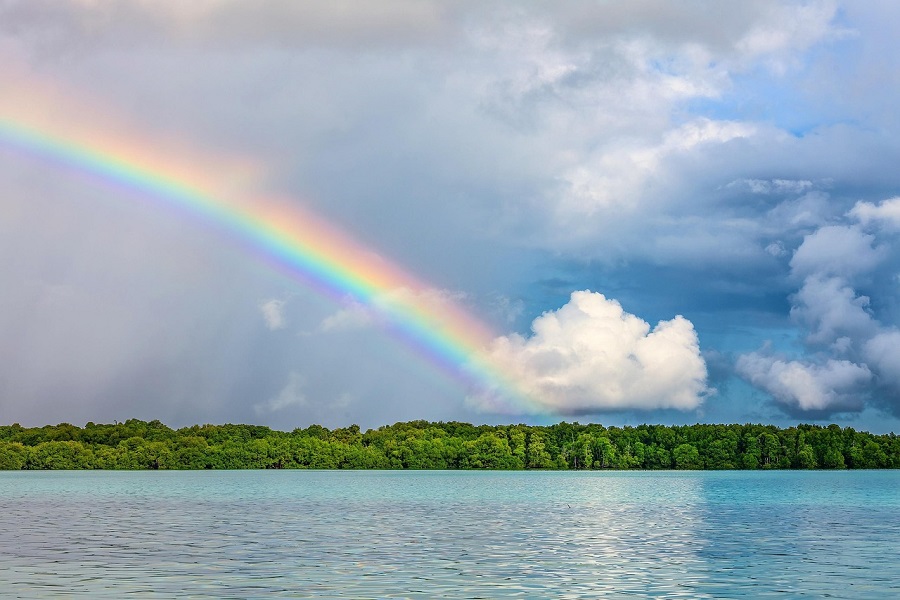
Climate change will be the dominant threat to 65% of the world’s island ecosystems by 2050, according to a global assessment that identifies thousands of islands facing growing environmental pressures.
The study, conducted by scientists from the Écologie, Société et Évolution laboratory and the Center for the Synthesis and Analysis of Biodiversity, assessed the exposure of 16,578 islands larger than 1 square kilometer (0.39 square miles) to global change.
The findings were published in the journal Proceedings of the National Academy of Sciences.
Researchers projected that land-use change will be the primary threat to 22% of island ecosystems by 2050, while biological invasions — the spread of nonnative species that can harm native ecosystems — will be the main threat to the remaining 13%.
Land-use change poses particular concerns in parts of the Pacific, including Micronesia and Fiji, as well as the Baltic Sea, the Bay of Bengal and Southeast Asia. Biological invasions are expected to pose heightened risks to temperate islands, including those in Northern Europe.
The assessment also identified countries and regions with disproportionately high numbers of islands exposed to multiple threats.
France ranks among the 25% of countries most exposed, with hotspots in French Polynesia and some islands near mainland France. Other countries identified as facing significant exposure include the Seychelles, Bangladesh, China, Fiji, Micronesia, Denmark, Sweden, India and Japan.
The researchers called for stronger protection of islands in 31 countries identified as having disproportionately high numbers of exposure hotspots. They said conservation strategies should be tailored to local conditions and the specific threats facing each island.
Ecosystem restoration and the expansion of protected areas could help reduce the effects of climate change and limit opportunities for invasive species to become established, the researchers said.
The exposure maps produced by the study could help governments and conservation organizations prioritize resources and identify islands requiring urgent intervention.
The researchers also emphasized the need for additional data to account for threats not fully represented in the assessment, including plastic, pesticide and light pollution, as well as the overexploitation of natural resources.
To conduct the assessment, the team combined existing datasets with original modeling at the global island scale. Additional models were used to project exposure to environmental threats through 2050.
The researchers said the findings provide a basis for targeting conservation efforts, although further data and research will be needed to build a more comprehensive picture of the pressures facing island ecosystems.
Research source: Proceedings of the National Academy of Sciences (PNAS) study
About The Author


