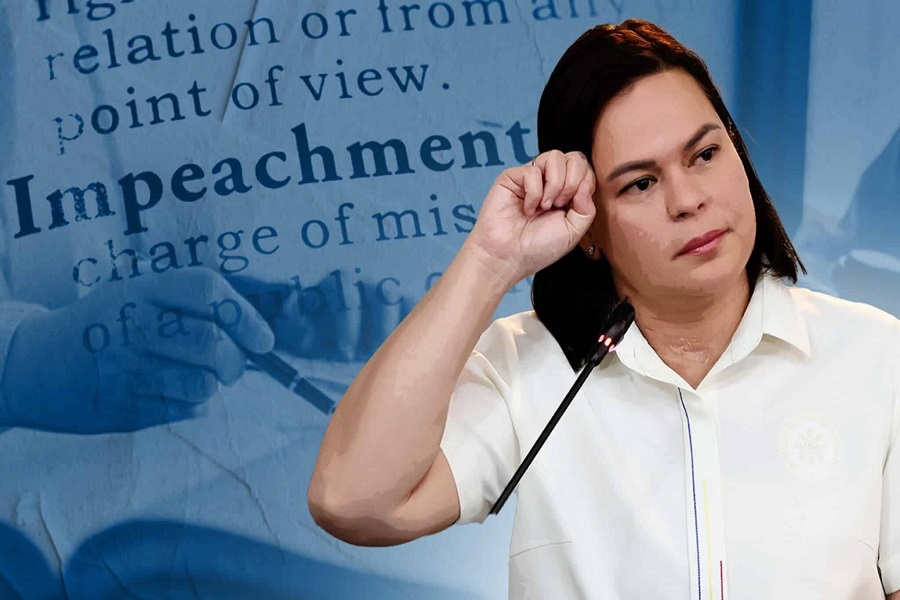
MANILA, Philippines — The Senate impeachment court on Monday issued its pre-trial order for the historic trial of Vice President Sara Duterte, establishing a procedural roadmap for proceedings that are expected to stretch deep into the summer and test the Philippines’ fragile political alliances.
Senate President and presiding officer Sherwin Gatchalian signed the document. It formally sets the trial’s start for July 6 at 2 p.m. and outlines a schedule running from Mondays to Wednesdays through late July, shifting to Tuesdays through Thursdays thereafter. It allocates roughly 62 trial days for the presentation of evidence: 11 days for allegations involving apparent threats by Duterte against President Ferdinand Marcos Jr., 31 days for the centerpiece claims of misused confidential funds, eight for bribery allegations, and 12 for unexplained wealth.
The order, in a display of judicial pragmatism amid a deep partisan divide, largely defers to the parties’ own submissions. It fully adopts the witness lists submitted by both the House prosecution panel and Duterte’s defense team, without striking any names.
Prosecutors listed 57 witnesses; the defense named 96. Among the overlapping figures are several high-profile or contentious names, including Duterte’s self-described former bagman Ramil Madriaga, former Sen. Antonio Trillanes IV, Ombudsman Boying Remulla, National Bureau of Investigation Director Melvin Matibag, and others tied to audits, banking records, and government agencies.
The order also permits the use of both English and Filipino during proceedings and directs the prosecution to disclose witnesses scheduled for the opening day by July 3. It leaves room for additional evidence-marking sessions if needed and affirms the one-day examination rule for witnesses, with judicial discretion for extensions.
Silence on Flashpoints
Conspicuously absent from the order are resolutions to several contentious issues that had threatened to bog down the pre-trial conference, which wrapped up after five intense days on June 25. The document is silent on how — or whether — a sealed Bureau of Internal Revenue box containing Duterte’s tax records will be opened, a point of sharp disagreement. It also does not address whether private prosecutors will be permitted to directly examine witnesses, another matter on which the sides had clashed.
Legal observers see the omissions as a pragmatic choice by the senator-judges to keep the process moving forward while reserving thorny procedural disputes for rulings from the bench once the trial is underway. Both sides have three days to submit comments on the order.
The impeachment, the second against Duterte after the Supreme Court dismissed the first on technical grounds, centers on four articles alleging betrayal of public trust, culpable violation of the Constitution, graft, and related offenses. Central to the case is the alleged misuse and irregular liquidation of more than ₱612 million in confidential funds funneled through the Office of the Vice President and the Department of Education during Duterte’s tenure as education secretary.
Prosecutors also point to claims of unexplained wealth, bribery involving education officials, and statements interpreted as threats against the Marcos family and House Speaker Martin Romualdez.
Duterte, who has denied the allegations as politically motivated, maintains significant popularity, particularly in Mindanao, and has framed the proceedings as an effort by the Marcos administration to sideline a formidable rival ahead of the 2028 presidential election.
Her defense team, led by figures including Atty. Michael Poa has signaled readiness to vigorously cross-examine prosecution witnesses and present counter-evidence.
High Stakes for Philippine Democracy
The trial comes at a pivotal moment in Philippine politics, deepening the rift between the once-allied Marcos and Duterte camps that dominated the 2022 elections. A conviction in the Senate would remove Duterte from office and bar her from future runs, though the threshold — a two-thirds vote of the senators present — is high, and political calculations are expected to weigh heavily.
Senate leaders have expressed hope that the proceedings can be completed without unduly disrupting legislative work, though estimates suggest the full trial could extend well beyond initial projections. The case promises a protracted public spectacle broadcast live from the Senate session hall, with dozens of witnesses and hundreds of documentary exhibits on both sides.
In the meantime, the pre-trial order provides a measure of clarity and forward momentum. Whether it will lead to a swift resolution or further procedural warfare remains to be seen once the crimson-robed senator-judges gavel the trial to order next week.
About The Author


