
 News Desk
Residents are being urged to take precautions against the heat after the Philippine Atmospheric, Geophysical and Astronomical Services Administration (PAGASA) forecast a heat index of 42 degrees Celsius in the city on Saturday, November 7.
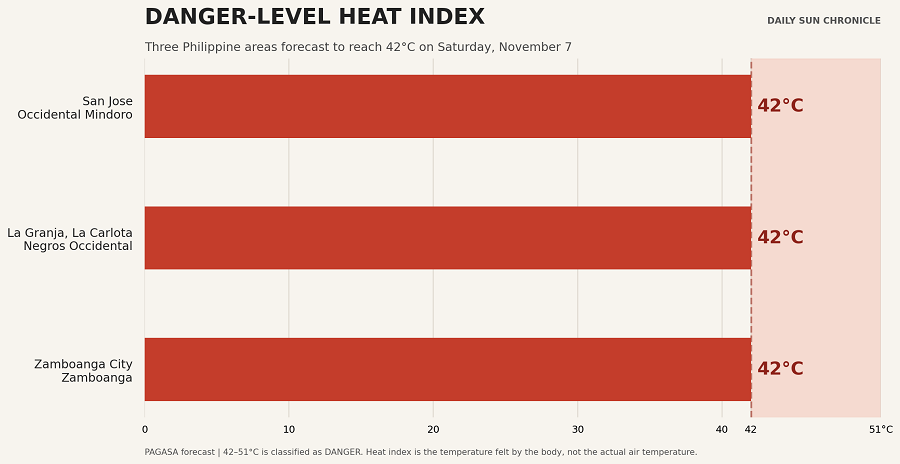
Zamboanga City is among three areas expected to reach the danger level, along with San Jose in Occidental Mindoro and La Granja in La Carlota, Negros Occidental, according to PAGASA’s heat index forecast issued Friday.
Three areas face danger-level heat
Saturday, November 7, 2026 | Projected heat index
What does 42°C mean?
PAGASA classifies heat index readings from 42°C to 51°C as DANGER. Prolonged exposure can cause heat cramps, heat exhaustion and heatstroke.
Heat index is the temperature the human body feels when humidity is considered along with air temperature. It is not the same as the actual measured air temperature.
Read the original report
© Daily Sun Chronicle
PAGASA classifies heat index readings of 42°C to 51°C as dangerous. Prolonged exposure to these conditions, particularly while doing physical work outdoors, increases the risk of heat-related illnesses.
The warning is especially important for people who spend much of their working day outside, including construction workers, street vendors, farmers, fisherfolk, traffic enforcers and delivery riders.
PAGASA warned that exposure to dangerous heat could cause heat cramps and heat exhaustion. Continued physical activity under these conditions could lead to heatstroke, a potentially life-threatening medical emergency.
The agency’s forecast also showed that San Jose and La Granja could reach 42°C on Sunday, November 8. Zamboanga City, however, was not included in Sunday’s list of areas expected to reach the danger level.
PAGASA advised residents in affected areas to limit their time outdoors, drink plenty of water and use umbrellas or other protection against direct sunlight. Those who need to perform physically demanding work should try to do so during cooler hours.
People should also avoid strenuous activities during the hottest part of the day and take regular breaks in shaded or well-ventilated areas.
Residents should watch for signs of heat-related illness, including dizziness, headache, muscle cramps, unusual weakness and nausea. Anyone suspected of suffering from heatstroke needs immediate medical attention.
For Zamboanga City residents, the forecast is a reminder that the risk from extreme heat should not be judged by the regular air temperature alone.
The heat index measures how hot the body feels when air temperature and humidity are taken into account. When humidity is high, sweat evaporates more slowly, making it harder for the body to cool down.
Residents are advised to monitor PAGASA’s weather bulletins and take precautions, especially when spending long hours outdoors.
About The Author


