

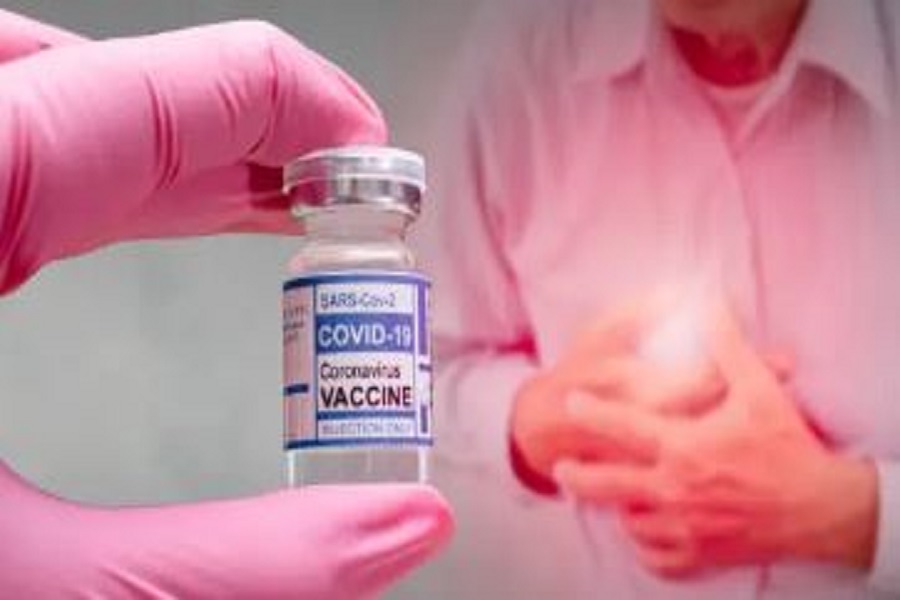
COVID-19 vaccines have saved lives, but they have also carried risks. One of the known but rare side effects is inflammation of the heart, which can lead to serious complications in some cases.
The two conditions associated with vaccination are myocarditis, or inflammation of the heart muscle, and pericarditis, an inflammation of the sac surrounding the heart.
Both have been reported following COVID-19 vaccination, particularly with the mRNA vaccines developed by Pfizer-BioNTech and Moderna. Health authorities say the complications are rare, and most people diagnosed with vaccine-associated myocarditis recover.
Still, the reports have raised questions about vaccine safety, particularly among younger people and those who develop chest pain, unusual heartbeats or breathing difficulties after receiving a shot.
How vaccines can affect the heart
Myocarditis can affect the heart’s ability to pump blood. In some cases, the inflammation can also interfere with the heart’s electrical activity, causing abnormal heart rhythms.
Researchers believe an unusual immune response may be involved, although the exact reason some people develop myocarditis after vaccination is not yet fully understood.
The condition has been reported most often among adolescent boys and young adult men, usually within seven days after receiving the second dose of an mRNA vaccine.
Cases have also been recorded among women, older adults and people who received other doses.
When does it become dangerous?
Most reported cases of vaccine-associated myocarditis have been mild and have improved with medical treatment and rest.
But myocarditis should not be taken lightly.
Severe inflammation can weaken the heart muscle and disrupt its electrical signals. In rare cases, this can lead to heart failure, dangerous heart rhythms, cardiogenic shock or cardiac arrest.
Death is possible, although it is not the usual outcome.
It is also important to distinguish between a death that occurs after vaccination and one caused by vaccination. A sudden death following a COVID-19 shot does not automatically establish a connection.
Determining whether the vaccine played a role requires a medical investigation. This may include a review of the patient’s medical history, clinical findings, laboratory results and, when appropriate, an autopsy.
COVID-19 infection can also damage the heart
The risks associated with vaccination must also be considered alongside the effects of COVID-19 infection.
The virus can trigger inflammation, blood clotting and damage to blood vessels. It has also been linked to myocarditis and other cardiovascular problems.
Studies have generally found a higher risk of myocarditis following COVID-19 infection than after mRNA vaccination. However, the difference varies depending on age, sex, vaccine type and the number of doses received.
That does not make vaccine-related heart problems any less important. People who experience complications deserve proper medical attention, and health authorities should continue monitoring these cases.
Know the warning signs
People who develop possible symptoms of myocarditis or pericarditis should seek medical attention, particularly if these occur within days of vaccination.
The warning signs include chest pain, shortness of breath, unusual or persistent heart palpitations, and unexplained fatigue.
Fainting, severe difficulty breathing or persistent chest pressure require immediate medical attention.
Doctors can check for possible heart inflammation through an electrocardiogram (ECG), a blood test for troponin, an echocardiogram and, when necessary, cardiac magnetic resonance imaging (MRI).
These examinations help determine whether the heart muscle has been injured and whether its ability to pump blood has been affected.
Vaccine safety requires continued monitoring
The experience with COVID-19 vaccines shows why vaccination programs need proper and transparent safety monitoring.
Rare side effects should not be dismissed simply because they affect a small number of people. At the same time, their risks should be weighed against the protection vaccines provide.
Health authorities need to keep tracking reported complications, share updated findings and make sure people who experience possible vaccine-related injuries receive proper care.
Public confidence is not built by dismissing people’s concerns. Neither is it helped by exaggerating risks or presenting unverified claims as medical facts.
People deserve clear answers about vaccine safety, including the possible side effects and what remains unknown.
The evidence should guide that discussion. Genuine vaccine-related injuries must be recognized and investigated, while claims of widespread or unexplained deaths must be supported by medical findings rather than speculation.
Works Cited
MLA 9th Edition
1. U.S. Food and Drug Administration. “FDA Approves Required Updated Warning in Labeling of mRNA COVID-19 Vaccines Regarding Myocarditis and Pericarditis Following Vaccination.” FDA, 25 June 2025, https://www.fda.gov/vaccines-blood-biologics/safety-availability-biologics/fda-approves-required-updated-warning-labeling-mrna-covid-19-vaccines-regarding-myocarditis-and.
2. Centers for Disease Control and Prevention. “Safety Considerations for COVID-19 Vaccines.” CDC, 23 Sept. 2026, https://www.cdc.gov/covid/hcp/vaccine-considerations/safety-considerations.html.
3. Block, Jason P., et al. “Cardiac Complications After SARS-CoV-2 Infection and mRNA COVID-19 Vaccination—PCORnet, United States, January 2021–January 2022.” Morbidity and Mortality Weekly Report, vol. 71, no. 14, 8 Apr. 2022, pp. 517–523. Centers for Disease Control and Prevention, https://www.cdc.gov/mmwr/volumes/71/wr/mm7114e1.htm. https://doi.org/10.15585/mmwr.mm7114e1.
4. World Health Organization. “Q&A on Myocarditis and COVID-19 Vaccines.” WHO, 27 Oct. 2021, https://www.who.int/news-room/questions-and-answers/item/q-a-on-myocarditis-and-covid-19-vaccines
About The Author


